“Why should I have to hide the fact that I don't believe there’s a supreme being? There’s no proof of it. There’s no harm in saying you’re an atheist. It doesn't mean you treat people any differently. I live by the Golden Rule to do unto others, as you'd want to be treated. I just simply don't believe in religion, and I don’t believe necessarily that there’s a supreme being that watches over all of us. I follow the teachings of George Carlin. George said he worshipped the sun. He was a fellow atheist. I’m in good company … Albert Einstein, Mark Twain, Charles Darwin. It’s not like I’m not with good company and intelligent people. There have been some good, intelligent atheists who have lived in the world.”
Quote by Jesse Ventura
Author
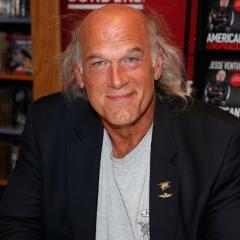
Jesse Ventura
Jesse Ventura (born July 15, 1951) is an American politician, professional wrestler, actor, and author. He served as the 38th Governor of Minnesota from 1999 to 2003, elected as a member of the Reform Party, making him one of the few third-party candidates to win a gubernatorial election in U.S. history. Ventura gained fame as a professional wrestler under the ring name 'Jesse Ventura' in the AWA and WWF, winning multiple championships. After retiring from wrestling, he pursued acting, appearing in films like 'Predator' and 'The Running Man.' His political career began as mayor of Brooklyn Park, Minnesota, before his successful gubernatorial run. Known for his blunt style and populist views, he advocated for tax cuts, government transparency, and civil liberties. Ventura is also a bestselling author and media commentator. His life exemplifies a unique crossover from sports entertainment to political leadership. more
You May Also Like
Source: Autobiography of Mark Twain: Volume 1, Reader's Edition
Source: Autobiography of Mark Twain: Volume 1, Reader's Edition
Source: Autobiography of Mark Twain: Volume 1, Reader's Edition
Source: On the Decay of the Art of Lying
Source: Autobiography of Mark Twain: Volume 1, Reader's Edition
Source: The Innocents Abroad, Or, the New Pilgrims' Progress