Quotessence
Home / Quotes / Quote by Robert Jordan

Quote by Robert Jordan

Work

Lord of Chaos

Browse quotes and source details for this work. more
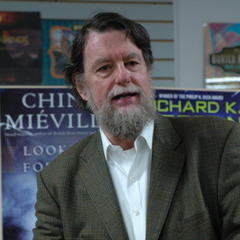
Author

Robert Jordan
Robert Jordan

Robert Jordan was an American author best known for his epic fantasy novel series, 'The Wheel of Time'. His works are celebrated for their complex characters, richly developed worlds, and profound philosophical themes. more

You May Also Like

“The argument that there are just wars often rests on the social system of the nation engaging in war. It is supposed that if a ‘liberal’ state is at war with a ‘totalitarian’ state, then the war is justified. The beneficent nature of a government was assumed to give rightness to the wars it wages. ...Woodrow Wilson and Franklin Roosevelt were liberals, which gave credence to their words exalting the two world wars, just as the liberalism of Truman made going into Korea more acceptable and the idealism of Kennedy’s New Frontier and Johnson’s Great Society gave an early glow of righteousness to the war in Vietnam. What the experience of Athens suggests is that a nation may be relatively liberal at home and yet totally ruthless abroad. Indeed, it may more easily enlist its population in cruelty to others by pointing to the advantages at home. An entire nation is made into mercenaries, being paid with a bit of democracy at home for participating in the destruction of life abroad.”

“Fortune favours the brave, sir," said Carrot cheerfully. "Good. Good. Pleased to hear it, captain. What is her position vis a vis heavily armed, well prepared and excessively manned armies?" "Oh, no–one's ever heard of Fortune favouring them, sir." "According to General Tacticus, it's because they favour themselves," said Vimes. He opened the battered book. Bits of paper and string indicated his many bookmarks. "In fact, men, the general has this to say about ensuring against defeat when outnumbered, out–weaponed and outpositioned. It is..." he turned the page, "'Don't Have a Battle.'" "Sounds like a clever man," said Jenkins. He pointed to the yellow horizon. "See all that stuff in the air?" he said. "What do you think that is?" "Mist?" said Vimes. "Hah, yes. Klatchian mist! It's a sandstorm! The sand blows about all the time. Vicious stuff. If you want to sharpen your sword, just hold it up in the air." "Oh." "And it's just as well because otherwise you'd see Mount Gebra. And below it is what they call the Fist of Gebra. It's a town but there's a bloody great fort, walls thirty feet thick. 's like a big city all by itself. 's got room inside for thousands of armed men, war elephants, battle camels, everything. And if you saw that, you'd want me to turn round right now. Whats your famous general got to say about it, eh?" "I think I saw something..." said Vimes. He flicked to another page. "Ah, yes, he says, 'After the first battle of Sto Lat, I formulated a policy which has stood me in good stead in other battles. It is this: if the enemy has an impregnable stronghold, see he stays there.'" "That's a lot of help," said Jenkins. Vimes slipped the book into a pocket. "So, Constable Visit, there's a god on our side, is there?" "Certainly, sir." "But probably also a god on their side as well?" "Very likely, sir. There's a god on every side." "Let's hope they balance out, then.”

“Rising up, rising down! History shambles on! What are we left with? A few half-shattered Greek stelae; Trotsky's eyeglasses; Gandhi's native-spun cloth, Cortes' pieces of solid gold (extorted from their original owner, Montezuma); a little heap of orange peels left on the table by the late Robespierre; John Brown's lengthily underlined letters; Lenin's bottles of invisible ink; one of Di Giovanni's suitcases, with an iron cylinder of gelignite and two glass tubes of acid inside; the Constitution of the Ku Klux Klan; a bruised ear (Napoleon pinched it with loving condescension)... And dead bodies, of course. (They sing about John Brown's body.) Memoirs, manifestoes, civil codes, trial proceedings, photographs, statues, weapons now aestheticized by that selfsame history - the sword of Frederick the Great, and God knows what else. Then dust blows out of fresh graves, and the orange peels go grey, sink, wither, rot away. Sooner or later, every murder becomes quaint. Charlemagne hanged four and a half thousand "rebels" in a single day, but he has achieved a storybook benevolence. And that's only natural: historiography begins after the orange has been sucked,; the peeler believes in the "great and beautiful things," or wants to believe; easy for us to believe likewise, since dust reduced truth and counterfeit to the same greyness - caveat emptor. But ends remain fresh, and means remain inexplicable. Rising up and rising down! And whom shall I save, and who is my enemy, and who is my neighbor?”

“The news in those days was full of war and migrants and nativists, and it was full of fracturing too, of regions pulling away from nations, and cities pulling away from hinterlands, and it seemed that as everyone was coming together everyone was also moving apart. Without borders nations appeared to be becoming somewhat illusory, and people were questioning what role they had to play.”