Quotessence
Home / Quotes / Quote by William Shakespeare

Quote by William Shakespeare

Work

A Midsummer Night’s Dream

Browse quotes and source details for this work. more

Author
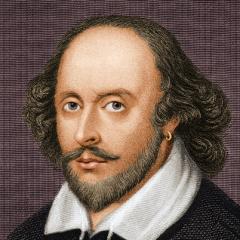
William Shakespeare
William Shakespeare

William Shakespeare (1564 - April 23, 1616) was one of the greatest poets of the English Renaissance, renowned for his dramatic works. His plays spanned a variety of genres, including tragedy, comedy, and history, and have had a profound impact on literature worldwide. more

You May Also Like

“My darling, I'm waiting for you — how long is a day in the dark, or a week? The fire is gone now, and I'm horribly cold. I really ought to drag myself outside but then there would be the sun. . . I'm afraid I waste the light on the paintings and on writing these words. We die, we die rich with lovers and tribes, tastes we have swallowed, bodies we have entered and swum up like rivers, fears we have hidden in, like this wretched cave. We are the real countries, not the boundaries drawn on maps with the names of powerful men. I know you will come and carry me out into the palace of winds. That's all I've wanted — to walk in such a place with you, with friends, on earth without maps...”

“Error regarding life necessary to life. - Every belief in the value and dignity of life rests on false thinking; it is possible only through the fact that empathy with the universal life and suffering of mankind is very feebly developed in the individual. Even those rarer men who think beyond themselves at all have an eye, not for this universal life, but for fenced-off portions of it. If one knows how to keep the exceptions principally in view, I mean the greatly gifted and pure of soul, takes their production for the goal of world-evolution and rejoices in the effects they in turn produce, one may believe in the value of life, because the one is overlooking all other men: thinking falsely, that is to say. And likewise if, though one does keep in view all mankind, one accords validity only to one species of drives, the less egoistical, and justifies them in face of all the others, then again one can hope for something of mankind as a whole and to this extent believe in the value of life: thus, in this case too, through falsity of thinking. Whichever of these attitudes one adopts, however, one is by adopting in an exception among men. The great majority endure life without complaining overmuch; they believe in the value of existence, but they do so precisely because each of them exists for himself alone, refusing to step out of himself as those exceptions do: everything outside themselves they notice not at all or at most as a dim shadow. Thus for the ordinary, everyday man the value of life rests solely on the fact that regards himself more highly than he does the world. The great lack of imagination from which he suffers means he is unable to feel his way into other beings and thus he participates as little as possible in their fortunes and sufferings. He, on the other hand, who really could participate in them would have to despair of the value of life; if he succeeded in encompassing and feeling within himself the total consciousness of mankind he would collapse with a curse on existence - for mankind has as a whole no goal, and the individual man when he regards its total course cannot derive from it any support or comfort, but must be reduced to despair. If in all he does he has before him the ultimate goallessness of man, his actions acquire in his own eyes the character of useless squandering. But to feel thus squandered, not merely as an individual fruits but as humanity as a whole, in the way we behold the individual fruits of nature squandered, is a feeling beyond all other feelings. - But who is capable of such a feeling? Certainly only a poet: and poets always know how to console themselves.”

“THE DEVIL. As far as I went, yes. But I will now go further, and confess to you that men get tired of everything, of heaven no less than of hell; and that all history is nothing but a record of the oscillations of the world between these two extremes. An epoch is but a swing of the pendulum; and each generation thinks the world is progressing because it is always moving. But when you are as old as I am; when you have a thousand times wearied of heaven, like myself and the Commander, and a thousand times wearied of hell, as you are wearied now, you will no longer imagine that every swing from heaven to hell is an emancipation, every swing from hell to heaven an evolution. Where you now see reform, progress, fulfilment of upward tendency, continual ascent by Man on the stepping stones of his dead selves to higher things, you will see nothing but an infinite comedy of illusion....”

“[..]Although personally, I think cyberspace means the end of our species." Yes? Why is that?" Because it means the end of innovation," Malcolm said. "This idea that the whole world is wired together is mass death. Every biologist knows that small groups in isolation evolve fastest. You put a thousand birds on an ocean island and they'll evolve very fast. You put ten thousand on a big continent, and their evolution slows down. Now, for our own species, evolution occurs mostly through our behaviour. We innovate new behaviour to adapt. And everybody on earth knows that innovation only occurs in small groups. Put three people on a committee and they may get something done. Ten people, and it gets harder. Thirty people, and nothing happens. Thirty million, it becomes impossible. That's the effect of mass media - it keeps anything from happening. Mass media swamps diversity. It makes every place the same. Bangkok or Tokyo or London: there's a McDonald's on one corner, a Benetton on another, a Gap across the street. Regional differences vanish. All differences vanish. In a mass-media world, there's less of everything except the top ten books, records, movies, ideas. People worry about losing species diversity in the rain forest. But what about intellectual diversity - our most necessary resource? That's disappearing faster than trees. But we haven't figured that out, so now we're planning to put five billion people together in cyberspace. And it'll freeze the entire species. Everything will stop dead in its tracks. Everyone will think the same thing at the same time. Global uniformity. [..]”