Quotessence
Home / Quotes / Quote by Philip S. Foner

Quote by Philip S. Foner

“Most labor historians today agree that craft unions created an aristocracy of skilled workers at the expense of the unskilled and semiskilled and, at the same time, retarded the further organization of American industry, thus, in the long run, adversely affecting all workers, skilled as well as unskilled.”

Quote by Philip S. Foner

Work

Organized Labor and the Black Worker 1619-1973

Browse quotes and source details for this work. more

Author
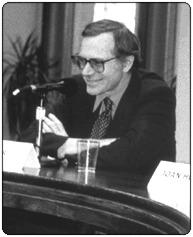
Philip S. Foner
Philip S. Foner

Philip S. Foner (December 14, 1910 – December 13, 1994) was an American Marxist historian, labor scholar, and editor. Born in New York City, he dedicated his career to studying the U.S. labor movement, socialist thought, and African American history. He is best known for his multi-volume work 'History of the Labor Movement in the United States,' which systematically chronicles workers' struggles from colonial times to the 20th century. Foner also edited the 'Life and Writings of Frederick Douglass' and other key texts. His leftist views often sparked controversy, but his rigorous archival research and interdisciplinary approach laid foundations for American social history. He taught at several universities, including Lincoln University and Columbia University, and received multiple academic honors. more

You May Also Like

“In the late 1970s, growth in Western economies began to slow down and returns on capital began to decline. Governments came under pressure to do something about it – to create a ‘fix’ for capital. So they attacked unions and gutted labour laws in order to drive the cost of wages down, and they privatised public assets that had previously been off limits to capital – mines, railways, energy, water, healthcare, telecommunications and so on – creating lucrative opportunities for private investors.”

“[1916] The IWW’s involvement in the [Minnesota] Iron Range’s labor unrest led mine company owners to take extreme actions and, just as in other conflict locations, they mobilized the businesses and municipal offices under their ownership. All mail and telegrams to and from Virginia were halted and reviewed. In other locations, including Biwabik, Aurora, and Eveleth, general stores turned away miners and their famlies. When the strikers formed their own cooperative for supplies and groceries, Oliver Iron Mining Company pressured wholesalers to serve notice that all credit would be curtailed pending the strike, and that payments for supplies must be made weekly. Meanwhile Sheriff Meining publicly announced new jail sentences for other agitators and miners for simply saying, “Hello Fellow Worker,” carrying a red IWW membership card, or discussing industrial unionism on public streets.”

“While I have never been a member of any union, I was a friend of Albert Shanker, president of the American Federation of Teachers, whom I met after my history of the New York City schools was published. His successor, Sandra Feldman, was also my friend, and I am friends with her successor, Randi Weingarten, who was elected AFT president in 2008.”

“The workers stayed in the plant instead of walking out, and this had clear advantages: they were directly blocking the use of strikebreakers; they did not have to act through union officials but were in direct control of the situation themselves; they did not have to walk outside in the cold and rain, but had shelter; they were not isolated, as in their work, or on the picket line; they were thousands under one roof, free to talk to one another, to form a community of struggle. Louis Adamic, a labor writer, describes one of the early sit-downs: Sitting by their machines, cauldrons, boilers and work benches, they talked. Some realized for the first time how important they were in the process of rubber production. Twelve men had practically stopped the works! . . . Superintendents, foremen, and straw bosses were dashing about. . . . In less than an hour the dispute was settled, full victory for the men.”

“Rochester became a magnet for African Americans in the twentieth century, one of many northern industrial cities that blacks flocked to during their six-decade-long Great Migration from the rural South. From 1950 to 1960, Rochester's total population had declined slightly, from about 332,000 to 319,000. But its black population had risen appreciably over the same period, tripling to nearly 24,000. Those who'd come to Smugtown were hungry for a better life. What they encountered upon their arrival, however, was mainly disappointment. Mirroring trends found across the country, many blacks in Rochester were forced to live in substandard housing as whites fled the urban core. The city's power structure remained almost exclusively white. And many blacks struggled to find decent jobs. Even though the unemployment rate in Rochester had fallen to about 2 percent in the summer of 1964, 14 percent of blacks were counted as without work. The big Kodak dollar and the lawn sprinklers of the suburbs have seemed both tantalizingly near and hopelessly far to the inner-city man," said an African American barber.”

“Say," I said, "do you guys cross picket lines?" The ChronoGuard agents looked at each other, then at the chronographs on their wrists, then at Lavoisier. The taller of the two was the first to speak. "She's right, Mr. Lavoisier, sir. I don't mind bullying and killing innocents, and I'll follow you beyond the crunch normally, but - " "But what?" asked Lavoisier angrily. "-but I am a loyal TimeGuild member. I don't cross picket lines.”

“The cities change. The bus line is different. The train runs on another track, but the scene is the same. Everyday in America, South Africa and other places in the world like them. Black people. My people. Travelin. To be cooks, janitors, housekeepers, porters, days workers, servants, Black boys, Beige girls, Brown daddies, Ebony mothers.”