Quotessence
Home / Quotes / Quote by Anthony Burgess

Quote by Anthony Burgess

“One thing I could never stand was to see a filthy dirty old drunky howling away at the filthy songs of his fathers and going blurp blurp in between as it might be a filthy old orchestra in his stinking rotten guts;I could never stand to see anyone like that. whatever his age might be, but more especially when he was real old like this one was.”

Quote by Anthony Burgess

Work

A Clockwork Orange

A novel set in a dystopian future where the protagonist, Alex, is a violent teenager. The story delves into the consequences of his actions and the societal implications of his transformation through an experimental conditioning procedure. more

Author

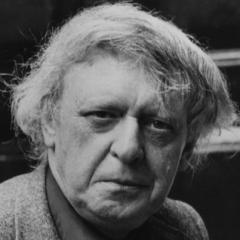
Anthony Burgess
Anthony Burgess

Anthony Burgess, born on February 25, 1917, in Manchester, England, was an accomplished British writer known for his distinctive literary style and profound insights into human psychology. His works spanned various literary genres, including novels, plays, and poetry. Burgess' most famous novel, A Clockwork Orange, is one of the most celebrated works of the 20th century, exploring themes such as free will, morality, and social control. more

You May Also Like

“For a while, Criticism travels side by side with the Work, then Criticism vanishes and it's the Readers who keep pace. The journey may be long or short. Then the Readers die one by one and the Work continues on alone, although a new Criticism and new Readers gradually fall into step with it along its path. Then Criticism dies again and the Readers die again and the Work passes over a trail of bones on its journey toward solitude. To come near the work, to sail in her wake, is a sign of certain death, but new Criticism and new Readers approach her tirelessly and relentlessly and are devoured by time and speed. Finally the Work journeys irremediably alone in the Great Vastness. And one day the Work dies, as all things must die and come to an end: the Sun and the Earth and the Solar System and the Galaxy and the farthest reaches of man's memory. Everything that begins as comedy ends in tragedy.”

“So Lorenzo grew up in Chile without arms, an unfortunate situation for any child, but he also grew up in Pinochet’s Chile, which turned unfortunate situations into desperate ones, on top of which he soon discovered that he was homosexual, which made his already desperate situation inconceivable and indescribable. Given these circumstances, it is not surprising that Lorenzo became an artist. (What else could he do?)”

“Dostum Borges aynalardan neden nefret ediyorsa ben de aynı nedenle ses kayıt cihazından nefret ediyorum, dedim. Siz Borges'in arkadaşı mıydınız, diye sordu Arturo Belano, bana biraz saldırgan gelen bir ses tonuyla, şaşırmış gibiydi. Artık uzaklarda kalan gençlik günlerimizde oldukça yakın arkadaştık, hem de çok yakın denebilir, diye cevap verdim. Kuzey Amerikalı kız Borges'in neden ses kayıt cihazından nefret ettiğini sordu. Herhalde kör olduğu için, dedim İngilizce olarak. Körlükle bu cihazın ne ilgisi var, diye sordu. Duymanın içerdiği tehlikeleri hatırlatıyor olmalı, kendi sesini, kendi ayak sesini, düşmanlarının ayak seslerini duymak, diye yanıtladım. Kuzey Amerikalı kız yüzüme bakarak onayladı. Borges'i pek iyi tanıdığını sanmıyorum. Benim eserlerimi bildiğiniyse hiç sanmıyorum, gerçi John Dos Passos İngilizceye çevirmişti. John Dos Passos'u da pek bildiğini sanmıyorum.”

“Inaki Echavarne, Giardinetto barı, Granada del Penedes sokağı, Barselona, Haziran 1994. Eleştiri, bir süre Yapıt'a eşlik eder, sonra yok olur ve bu kez yapıta Okurlar eşlik eder. Yolculuk uzun da olabilir kısa da. Sonra da Okurlar birer birer ölür ve Yapıt yoluna yalnız devam eder, derken başka Eleştiriler ve başka Okurlar çıkar yoluna. Sonra Eleştiri bir kez daha ölür, Okurlar bir kez daha ölür, Yapıt bu kemik yığını üzerinden geçerek yalnızlıklara yolculuğunu sürdürür. Yapıt'a yaklaşmak, gemiyi onun aydınlığında yüzdürmek kesin ölümün yanılmaz işaretidir, oysa başka Eleştiriler ve başka Okurlar durmaksızın yanaşırlar Yapıt'a, zaman hızla yutar onları da. Sonunda, Yapıt Sonsuzlukta yalnız sürdürür yolculuğunu. Ve bir gün, her şey gibi Yapıt da ölür, tıpkı Güneş'in söneceği, Yerkürenin, Güneş Sisteminin ve Yıldızların, insanoğlunun yok olacağı gibi. Komedi gibi başlayan her şey trajedi olarak son buluyor.”