Quotessence
Home / Quotes / Quote by Reza Aslan

Quote by Reza Aslan

“Whether for good or for bad, the Iran that ultimately rises out of the ashes of last summer's uprising will be unlike the Iran we know today, and for that we can thank the Green Movement, not another round of useless sanctions.”

Quote by Reza Aslan

Author
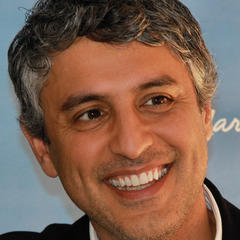
Reza Aslan
Reza Aslan

Reza Aslan is an American writer, scholar, and television personality known for his research and writing on religion, history, and culture. Born on May 3, 1972, Aslan has gained recognition for his works that cover topics such as Islam, Christianity, and religious freedom. more

You May Also Like

“Rolf Ekeus came round to my apartment one day and showed me the name of the Iraqi diplomat who had visited the little West African country of Niger: a statelet famous only for its production of yellowcake uranium. The name was Wissam Zahawi. He was the brother of my louche gay part-Kurdish friend, the by-now late Mazen. He was also, or had been at the time of his trip to Niger, Saddam Hussein's ambassador to the Vatican. I expressed incomprehension. What was an envoy to the Holy See doing in Niger? Obviously he was not taking a vacation. Rolf then explained two things to me. The first was that Wissam Zahawi had, when Rolf was at the United Nations, been one of Saddam Hussein's chief envoys for discussions on nuclear matters (this at a time when the Iraqis had functioning reactors). The second was that, during the period of sanctions that followed the Kuwait war, no Western European country had full diplomatic relations with Baghdad. TheVatican was the sole exception, so it was sent a very senior Iraqi envoy to act as a listening post. And this man, a specialist in nuclear matters, had made a discreet side trip to Niger. This was to suggest exactly what most right-thinking people were convinced was not the case: namely that British intelligence was on to something when it said that Saddam had not ceased seeking nuclear materials in Africa. I published a few columns on this, drawing at one point an angry email from Ambassador Zahawi that very satisfyingly blustered and bluffed on what he'd really been up to. I also received—this is what sometimes makes journalism worthwhile—a letter from a BBC correspondent named Gordon Correa who had been writing a book about A.Q. Khan. This was the Pakistani proprietor of the nuclear black market that had supplied fissile material to Libya, North Korea, very probably to Syria, and was open for business with any member of the 'rogue states' club. (Saddam's people, we already knew for sure, had been meeting North Korean missile salesmen in Damascus until just before the invasion, when Kim Jong Il's mercenary bargainers took fright and went home.) It turned out, said the highly interested Mr. Correa, that his man Khan had also been in Niger, and at about the same time that Zahawi had. The likelihood of the senior Iraqi diplomat in Europe and the senior Pakistani nuclear black-marketeer both choosing an off-season holiday in chic little uranium-rich Niger… well, you have to admit that it makes an affecting picture. But you must be ready to credit something as ridiculous as that if your touching belief is that Saddam Hussein was already 'contained,' and that Mr. Bush and Mr. Blair were acting on panic reports, fabricated in turn by self-interested provocateurs.”

“On January 17, 1991 and for the 43 days that followed, I watched CNN’s live coverage of SCUD missiles and bombs fall over Baghdad like rain; then the 12 ½ years of unjust sanctions that killed approximately a million Iraqis, half of which were children under the age of five; then an unjust attack in 2003 that opened the borders to terrorists from all over the world and reduced the cradle of civilization to piles of rubble. The gov. asked us to support their plan or else be considered anti-American and undemocratic and they ask of us the same today, 25 years later, even though history proved they were pro-profit not pro-life.”

“Sanctions levied Sanctions heavy
Break my back
But you will not end me Many have assailed
Many have failed
Pack after pack
Blood shed but to no avail Had my share of years
Had my share of tears
SAVAK to crack
A century of polluted atmosphere This is my land
This is my clan
Turn the clock back
I'm as old as the history of man Gone are the golden days
Gone are the golden ways Stopped in my tracks
Time will lead me out of this maze Keep my people in pain
Keep my people in chains
Wrapped in my flag
The end welcomes tyranny's campaign Levy your sanctions
Heavy my reaction
From The Burnt City to Ganzak
I, Simurgh, will rise from the ashes History will go round History will go down
Evil, domestic and foreign Will burn to the ground Time bears witness Time bears justice
Our mystic misfortune A lingering dark nimbus Rise up my wings
Rise up my kings
This majestic sovereign Will be reborn once again”

“The policy debate about sanctions has been repeated almost every decade since the [League of Nations] was created in the wake of World War I. At its core has been the perennial question: do economic sanctions work? While the success rate differs depending on the objective, the historical record is relatively clear: most economic sanctions have not worked. In the twentieth century, only one in three uses of sanctions was “at least partially successful.” More modest goals have better chances of success. But from the available data it is clear that the history of sanctions is largely a history of disappointment. What is striking is that this limited utility has not affected frequency of use. To the contrary: sanctions use doubled in the 1990s and 2000s compared to the period from 1950 to 1985; by the 2010s it had doubled again. Yet while in the 1985–1995 period, at a moment of great relative Western power, the chances of sanctions success were still around 35–40 percent, by 2016 this had fallen below 20 percent. In other words, while the use of sanctions has surged, their odds of success have plummeted.”

“Rather than considering the Iraqi regime solely responsible for these sanctions, many exiled and displaced academics believe that the UN bears the main ethical and human responsibility for the damage the embargo caused for Iraqi people and society. Many academics saw these sanctions as the UN’s method to obtain the consent of Iraqi people to the 2003 occupation through starving and weakening the people, as well as destroying Iraq’s strong institutions and infrastructure.”