Quotessence
Home / Quotes / Quote by Philip Roth

Quote by Philip Roth

Work

I Married a Communist

This memoir explores the complexities of political ideology and personal relationships, offering an intimate look at the author's journey through the lens of their spouse's Communist beliefs and the societal context of the time. more

Author
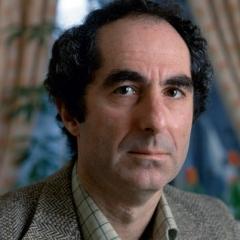
Philip Roth
Philip Roth

Philip Roth (1933-2018) was one of America's most influential contemporary novelists, renowned for his profound explorations of Jewish-American identity, sexuality, politics, and the human condition. His breakthrough work, "Portnoy's Complaint" (1969), became a landmark in American literature. Roth received two National Book Awards and was a multiple-time Pulitzer Prize finalist. Over his six-decade career, he published more than 30 books that significantly shaped American fiction. He passed away in New York City on May 22, 2018, at age 85. more

You May Also Like

“But we, when moved by deep feeling, evaporate; we breathe ourselves out and away; from moment to moment our emotion grows fainter, like a perfume. Though someone may tell us: “Yes, you’ve entered my bloodstream, the room, the whole springtime is filled with you . . . " — what does it matter? they can’t contain us, we vanish inside them and around them. (Denn wir, wo wir fühlen, verflüchtigen; ach wir atmen uns aus und dahin; von Holzglut zu Holzglut geben wir schwachern Geruch. Da sagt uns wohl einer: ja, du gehst mir ins Blut, dieses Zimmer, der Frühling füllt sich mit dir . . . Was hilfts, er kann uns nicht halten, wir schwinden inihm und um ihn.)”

“We may try to numb anger, but when we do we numb joy and pleasure on the world too. This numbing does not mean we stop having the feelings, it just stops us from being aware that we are having them. Those feelings are still churning away, tensing our bodies, writing unconscious scripts for us, storing up stuff to unload on to the world, on to our kids, but preferably on to our therapists. This numbness also inhibits the ability to have good relationships as well.”

“Students of human nature and philosophers have long ago taught us that we do wrong to value our intelligence as an independent force and to overlook its dependence upon our emotional life. According to their view our intellect can work reliably only when it is removed from the influence of powerful incitements; otherwise it acts simply as an instrument at the beck and call of our will and delivers the results which the will demands. Logical argumentation is therefore powerless against affective interests; that is why arguing with reasons which, according to Falstaff, are as common as blackberries, are so fruitless where our interests are concerned. Whenever possible psychoanalytic experience has driven home this assertion. It is in a position to prove every day that the cleverest people suddenly behave as unintelligently as defectives as soon as their understanding encounters emotional resistance, but that they regain their intelligence completely as soon as this resistance has been overcome.”

“Grief does not want to be held, blocked, or braced against. Grief does not want to be quarantined, scrutinized, or shamed into disappearing. Just like every other emotion, grief wants to be able to move through you, free from judgment, criticism, or camouflage.”

“Letting grief become action is about the body. It’s literally about taking grief outside of yourself and letting grief’s emotions and identities be expressed in the physical world around you. Whether there are witnesses or not, it’s tangible evidence that grief has called you to make or do something. The act of doing something is a visible marker that grief has had and is continuing to have an impact on your life.”