Quotessence
Home / Quotes / Quote by Samuel Richardson

Quote by Samuel Richardson

“Upon my word, I most heartily despise that sex! I wish they would let our fathers and mothers alone; teasing them to tease us with their golden promises, and protestations, and settlements, and the rest of their ostentatious nonsense. How charmingly might you and I live together and despite them all!- But to be cajoled, wire-drawn, and ensnared, like silly birds, into a state of bondage or vile subordination: to be courted as princesses for a few weeks, in order to be treated as slaves for the rest of our lives”

Quote by Samuel Richardson

Author
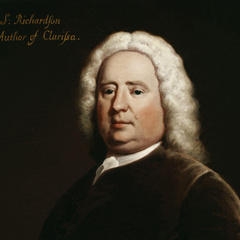
Samuel Richardson
Samuel Richardson

Samuel Richardson (August 19, 1689 - July 4, 1761) was an 18th-century English writer, widely regarded as one of the founders of the modern English novel. Born in London during the reign of James II, he initially worked in book printing and publishing before turning to writing. Richardson's major works include 'Pamela,' 'Clarissa,' and 'Sir Charles Grandison,' which are renowned for their psychological depth and vivid character development. He pioneered the use of diary and epistolary formats, allowing readers intimate access to characters' inner worlds. His novels were immensely popular in their time and significantly influenced the development of the novel form, particularly in psychological characterization and social commentary. Richardson's focus on moral instruction and feminine virtue reflected 18th-century English societal values. more

You May Also Like

“When clients are hyperaroused or overwhelmed emotionally, voluntarily narrowing their field of consciousness allows them to assimilate a limited amount of incoming information, thereby optimizing the chance for successful integration. For example, as one client began to report her traumatic experience, her arousal escalated: Her heart started to race, she felt afraid and restless, and had trouble thinking. She was asked to stop talking and thinking about the trauma, to inhibit the images, thoughts, and emotions that were coming up, and orient instead to her physical sensation until her arousal returned to the window of tolerance. With the help of her therapist, she focused on her body and described how her legs felt, the phyisical feeling of anxiety in her chest, and the beating of her heart. These physical experiences gradually subsided, and only then was she encouraged to return to the narrative.”

“This reorienting is not an attempt to avoid or discount clients' pain and ongoing suffering. Rather, it is a means to help them observe, firsthand, how their chronic orienting tendencies toward reminders of the past recreate the trauma-related experience of danger and powerlessness, whereas choosing to orient to a good feeling can result in an experience of safety and mastery. As clients become able to do so the new objects of orientation often become more defined and & Goodman 1951). Rather than attention being drawn repeatedly to physical pain or traumatic activation, the good feeling becomes more prominent in the client's awareness. This exercise of reorienting toward a positive stimulus can surprise and reassure clients that they are not imprisoned indefinitely in an inner world of chronic traumatic reexperiencing, and that they have more possibilities and control than they had imagined. These orienting exercises need to be practiced again and again for mastery.”

“Although Megan "knew" she was not in danger, her body told her that she was. If sensorimotor habits are firmly entrenched, accurate cognitive interpretations may not exert much influence on changing bodily orgamzation and arousal responses. Instead, the traumatized person may experience the reality of the body rather than that of the mind. To be most effective, the sensorimotor psychotherapist works on both the cognitive and sensorimotor levels. With Megan, a purely cognitive approach might foster some change in her integrative capacity, but the change would be only momentary if the cowering response were reactivated each time she received feedback at work... However, if she is encouraged to remember to "stand tall" in the face of criticism, her body and her thoughts will be congruent with each other and with current reality.”

“In sensorimotor treatment, traumatized clients are taught to become aware of trauma-related tendencies of orientation and to redirect their attention away from the past and toward the present moment. Repeatedly "shifting the client's attention to the various things going on outside of the flow of conversation [evokes] experiences which are informative and emotionally meaningful" (Kurtz, 2004, p. 40). Redirecting orientation and attention from conversation to present-moment experience-that is, from external awareness to internal awareness, and from the past to the present⎯engages exploration and curiosity, and clients can discover things about themselves that they did not know previously (Kurtz, 2004).”

“having clients orient to the stimulus on which they are very fixated helps them consciously and directly attend to reminders of past trauma. This provides the opportunity for the reactions to the trauma-related stimulus to change from involuntary and reflexive to reflective awareness and assimilation. The client's sense of control and efficacy is often enhanced, whereas simply orienting to new, neutral, or pleasurable stimuli may not accomplish this (Ford, personal communication, August 12, 2005).”