Quotessence
Home / Quotes / Quote by Cormac McCarthy

Quote by Cormac McCarthy

Work

All the Pretty Horses

Cormac McCarthy's All the Pretty Horses is a compelling narrative that follows a young cowboy's journey across the Texas landscape, delving into the complexities of growing up and the pursuit of self-discovery. more

Author
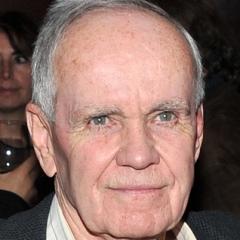
Cormac McCarthy
Cormac McCarthy

American novelist known for his profound literary style and rich imagination. His notable works include 'The Border Trilogy' and 'No Country for Old Men'. more

You May Also Like

“To generate exuberant diversity in a city's streets and districts four conditions are indispensable: 1. The district, and indeed as many of its internal parts as possible, must serve more than one primary function; preferably more than two... 2. Most blocks must be short; that is, streets and opportunities to turn corners must be frequent. 3. The district must mingle buildings that vary in age and condition, including a good proportion of old ones so that they vary in the economic yield they must produce. This mingling must be fairly close-grained. 4. There must be a sufficiently dense concentration of people, for whatever purposes they may be there...”

“The real perfect storm fueling the opioid epidemic had been the collapse of work, followed by the rise in disability and its parallel, pernicious twin: the flood of painkillers pushed by rapacious pharma companies and regulators who approved one opioid pill after another. Declining workforce participation wasn't just a rural problem anymore; it was everywhere, albeit to a lesser degree in areas with physicians who prescribed fewer opioids and higher rates of college graduates. As Monnat put it: "When work no longer becomes an option for people, what you have at the base is a structural problem, where the American dream becomes a scam." She likened the epidemic's spread not to crabgrass but a wildfire: "If the economic collapse was the kindling in this epidemic, the opiates were the spark that lit the fire." And the helicopters were nowhere in sight.”

“Certainly, patients may be noncompliant, but how relevant is the notion of compliance in rural Haiti? Doctors may instruct their patients to eat well. But the patients will 'refuse' if they have no food. They may be told to sleep in an open room and away from others, and here again they will be 'noncompliant' if they do not expand and remodel their miserable huts. They may be instructed to go to a hospital. But if hospital care must be paid for in cash, as is the case throughout Haiti, and the patients have no cash, they will be deemed 'grossly negligent'.”

“O for a Muse of fire, that would ascend The brightest heaven of invention, A kingdom for a stage, princes to act And monarchs to behold the swelling scene! Then should the warlike Harry, like himself, Assume the port of Mars; and at his heels, Leash'd in like hounds, should famine, sword and fire Crouch for employment. But pardon, and gentles all, The flat unraised spirits that have dared On this unworthy scaffold to bring forth So great an object: can this cockpit hold The vasty fields of France? or may we cram Within this wooden O the very casques That did affright the air at Agincourt? O, pardon! since a crooked figure may Attest in little place a million; And let us, ciphers to this great accompt, On your imaginary forces work. Suppose within the girdle of these walls Are now confined two mighty monarchies, Whose high upreared and abutting fronts The perilous narrow ocean parts asunder: Piece out our imperfections with your thoughts; Into a thousand parts divide on man, And make imaginary puissance; Think when we talk of horses, that you see them Printing their proud hoofs i' the receiving earth; For 'tis your thoughts that now must deck our kings, Carry them here and there; jumping o'er times, Turning the accomplishment of many years Into an hour-glass: for the which supply, Admit me Chorus to this history; Who prologue-like your humble patience pray, Gently to hear, kindly to judge, our play.”