Quotessence
Home / Quotes / Quote by Bryan Stevenson

Quote by Bryan Stevenson

Work

Author

Bryan Stevenson
Bryan Stevenson

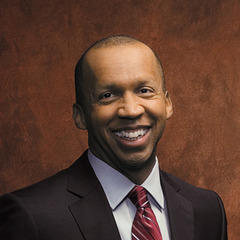
Bryan Stevenson is an American lawyer, educator, and social activist known for his contributions to criminal justice reform and the defense of the rights of the poor. Born on November 14, 1959, Stevenson is a professor at the University of Alabama at Birmingham School of Law. more

You May Also Like

“But there was a sense of something tipping out of balance. The times seemed out of joint. There was too much decadence. Too much intensity. Too much change. Too much happiness juxtaposed with too much misery. Too much wealth next to too much poverty. The world was becoming faster and louder, and the social systems were becoming as chaotic and fragmented as jazz scores. So there was a craving, in some places, for simplicity, for order, for scapegoats and for bully-boy leaders, for nations to become like religions or cults. It happened every now and then. It seemed, in the 1930s, that the whole course of humanity was at stake. As it very often does today. Too many people wanted to find an easy answer to complicated questions. It was a dangerous time to be human. To feel or to think or to care.”

“Have you ever played Monopoly? It's a board game designed to teach kids capitalism. And what happens in the end? The winner has all the money, and everyone else has nothing. Woohoo! So much fun! That's literally how America works. That's why there are a few super rich people who own almost everything, and tens of millions of dirt poor people who have nothing.”

“In societies of deep poverty, women are pushed to the margins. Women are outsiders. That’s not a coincidence. When any community pushes any group out, especially its women, it’s creating a crisis that can only be reversed by bringing the outsiders back in. That is the core remedy for poverty and almost any social ill—including the excluded, going to the margins of society and bringing everybody back in.”

“One of the longest-running public health studies dates from the 1970s, when half of the families in a number of villages in Bangladesh were given contraceptives and the other half were not. Twenty years later, the mothers who took contraceptives were healthier. Their children were better nourished. Their families had more wealth. The women had higher wages. Their sons and daughters had more schooling. The reasons are simple: When the women were able to time and space their pregnancies, they were more likely to advance their education, earn an income, raise healthy children, and have the time and money to give each child the food, care, and education needed to thrive. When children reach their potential, they don’t end up poor. This is how families and countries get out of poverty. In fact, no country in the last fifty years has emerged from poverty without expanding access to contraceptives.”