“I have always found it difficult not to be moved by Jerusalem, even when I hated it—and God knows I have hated it for the sheer human cost of it. But the sight of it, from afar or inside the labyrinth of its walls, softens me. Every inch of it holds the confidence of ancient civilizations, their deaths and their birthmarks pressed deep into the city's viscera and onto the rubble of its edges. The deified and the condemned have set their footprints in its sand. It has been conqured, razed and, rebuilt so many times that its stones seem to possess life, bestowed by the audit trail of prayer and blood. Yet somehow, it exhales humility. It sparks an inherent sense of familiary in me—that doubtless, irrefutable Palestinian certainty that I belong to this land. It possesses me, no matter who conquers it, because its soil is the keeper of my roots, of the bones of my ancestors. Because it knows the private lust that flamed the beds of all my foremothers. Because I am the natural seed of its passionate, tempestuous past. I am a daughter of the land, and Jerusalem reassures me of this inalienable right, far more than the yellowed property deeds, the Ottoman land registries, the iron keys to our stolen homes, or UN resolutions and decrees of superpowers could ever do.”
Quote by Susan Abulhawa
Work
Mornings in Jenin is a fictional narrative that delves into the lives of its characters amidst the backdrop of the Israeli-Palestinian conflict. The story is centered in the village of Jenin, where the author examines the dynamics of family relationships and the impact of political turmoil on individual lives. more
Author
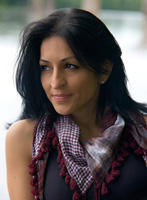
Susan Abulhawa (born 1970) is a Palestinian-American writer and human rights activist. She is best known for her novel 'Mornings in Jenin', which explores the impact of the 1948 Nakba on a Palestinian family. Her work focuses on Palestinian identity, exile, and resistance, blending personal narrative with historical context. Abulhawa also founded the nonprofit 'Palestine Children's Relief Fund', supporting children in Gaza. Her writing and activism have gained international recognition, though her stance has sparked debate. more
You May Also Like
“He feels safer just knowing that even if he's away there is a home waiting for him to return.”
“Places ain't home. People is. Bricks and chairs is nothing.”
“And when you are kept from your home, no matter where you are, you are in a cage.”
“Sometimes in life you just have to take a leap of faith.”