Quotessence
Home / Quotes / Quote by Anthony Doerr

Quote by Anthony Doerr

Work

All the Light We Cannot See

Browse quotes and source details for this work. more

Author
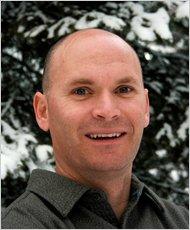
Anthony Doerr
Anthony Doerr

Anthony Doerr is an American author of novels known for his delicate narrative and profound character development. His works often explore themes of history, memory, and human experience. Born on October 27, 1973, Doerr graduated from Yale University. His career began with writing short stories for The New Yorker, which later led to his long-form novel writing. more

You May Also Like

“A stab had clearly once been made at de-uglifying these public spaces by painting a corridor a jaunty yellow. This was because, it turned out, babies come here to have their brains tested and someone thought the yellow might calm them. But I couldn’t see how. Such was the oppressive ugliness of this building it would have been like sticking a red nose on a cadaver and calling it Ronald McDonald.”

“We didn't know how much love and forgiveness and understanding would be required to make it back on the path we were meant to be in, together. But what we did know was that we were here because we had both been willing to fight; to fight for each other, to fight for ourselves, to fight for love. And that means that despite all the pain that we had endured to be where we are, in the end, love won. ~Evie, Epilogue”

“I was sitting in this small coffee shop a couple days ago and I saw this old man sitting at a table across from me. He looked so lonely, so sad. I was too, but it suddenly occurred to me that some people go through their whole lives never being loved or loving as deeply as I love you. There's always going to be the chance that I could lose you in this lifetime. There's nothing any of us can do about the possibility of loss. But in that moment, I decided that I was more interested in focusing on the great privilege I've been given in having you at all.”

“The value the world sets upon motives is often grossly unjust and inaccurate. Consider, for example, two of them: mere insatiable curiosity and the desire to do good. The latter is put high above the former, and yet it is the former that moves one of the most useful men the human race has yet produced: the scientific investigator. What actually urges him on is not some brummagem idea of Service, but a boundless, almost pathological thirst to penetrate the unknown, to uncover the secret, to find out what has not been found out before. His prototype is not the liberator releasing slaves, the good Samaritan lifting up the fallen, but a dog sniffing tremendously at an infinite series of rat-holes.”

“Though necessary to the work of uncovering the past, archives are nevertheless limited and misleading storehouses of information. While at times imposing and formal enough as to seem all-encompassing in their brick, glass, and steel structures, archives only include records that survived accident, were viewed as important in their time or in some subsequent period, and were deemed worthy of preservation. These records were originally created by fallible people like you and me, who could err in their jottings, hold vexed feelings they sometimes transmitted onto the page, or consciously or unconsciously misconstrue events they witnessed. Even in their most organized form, archived records are mere scraps of accounts of previous happenings, "rags of realities" that we painstakingly stick together in order to picture past societies.”