“The fascist leaders were outsiders of a new type. New people had forced their way into national leadership before. There had long been hard-bitten soldiers who fought better than aristocratic officers and became indispensable to kings. A later form of political recruitment came from young men of modest background who made good when electoral politics broadened in the late nineteenth century. One thinks of the aforementioned French politician Léon Gambetta, the grocer’s son, or the beer wholesaler’s son Gustav Stresemann, who became the preeminent statesman of Weimar Germany. A third kind of successful outsider in modern times has been clever mechanics in new industries (consider those entrepreneurial bicycle makers Henry Ford, William Morris, and the Wrights). But many of the fascist leaders were marginal in a new way. They did not resemble the interlopers of earlier eras: the soldiers of fortune, the first upwardly mobile parliamentary politicians, or the clever mechanics. Some were bohemians, lumpen-intellectuals, dilettantes, experts in nothing except the manipulation of crowds and the fanning of resentments: Hitler, the failed art student; Mussolini, a schoolteacher by trade but mostly a restless revolutionary, expelled for subversion from Switzerland and the Trentino; Joseph Goebbels, the jobless college graduate with literary ambitions; Hermann Goering, the drifting World War I fighter ace; Heinrich Himmler, the agronomy student who failed at selling fertilizer and raising chickens. Yet the early fascist cadres were far too diverse in social origins and education to fit the common label of marginal outsiders. Alongside street-brawlers with criminal records like Amerigo Dumini or Martin Bormann one could find a professor of philosophy like Giovanni Gentile or even, briefly, a musician like Arturo Toscanini. What united them was, after all, values rather than a social profile: scorn for tired bourgeois politics, opposition to the Left, fervent nationalism, a tolerance for violence when needed.”
Quote by Robert O. Paxton
Work
The Anatomy of Fascism
This book delves into the political ideology of fascism, examining its roots, key features, and the ways it has influenced societies and governments throughout history. more
Author
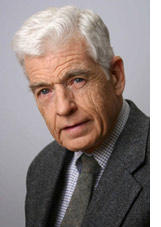
Robert O. Paxton
Robert O. Paxton is a renowned American historian known for his research on 20th-century European history, particularly the history of France. His works delve into the historical background of totalitarianism and racism, significantly influencing the understanding of modern political and social movements. more
You May Also Like
Source: American Fascism: A German Writer's Urgent Warning To America
“Did you know that love causes the same chemical reaction as insanity?”
Source: American Fascism: A German Writer's Urgent Warning To America
“Atheism is not a religion, just like not skiing is not a sport.”
Source: Atheism Memes: 40 Reasons Why I'm An Atheist
Source: Atheism Memes: 40 Reasons Why I'm An Atheist
“He flings pros into the air like skeet, and one by one he shatters them with cons.”
Source: Coming Into the Country
Source: Chasing Cassandra
Source: Scent of Darkness