Quotessence
Home / Quotes / Quote by Sam Harris

Quote by Sam Harris

“There is a sense in which all cognition can be said to be motivated. One is motivated to understand the world, to be in touch with reality, to remove doubt, etc. Alternately one might say that motivation is an aspect of cognition itself. Nevertheless, motives like wanting to find the truth, not wanting to be mistaken, etc., tend to align with epistemic goals in a way that many other commitments do not. As we have begun to see, all reasoning may be inextricable from emotion. But if a person's primary motivation in holding a belief is to hue to a positive state of mind, to mitigate feelings of anxiety, embarrassment, or guilt for instance. This is precisely what we mean by phrases like "wishful thinking", and "self-deception". Such a person will of necessity be less responsive to valid chains of evidence and argument that run counter to the beliefs he is seeking to maintain. To point out non-epistemic motives in an others view of the world, therefore, is always a criticism, as it serves to cast doubt on a persons connection to the world as it is.”

Quote by Sam Harris

Work

The Moral Landscape: How Science Can Determine Human Values

This book delves into the relationship between scientific knowledge and moral philosophy, arguing that scientific principles can provide a framework for understanding and evaluating human values. The author examines various ethical theories and scientific concepts to illustrate the potential for a more objective approach to morality. more

Author
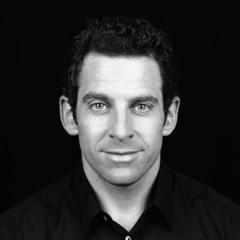
Sam Harris
Sam Harris

Sam Harris is an American author, philosopher, and neuroscientist known for his work on atheism, rational thinking, and the scientific method. Born on April 9, 1967, Harris graduated from the University of California, Los Angeles with a Bachelor's degree in cognitive psychology. His writings, including 'Free Will', 'The End of Faith', and 'The Knowledge Problem', have sparked widespread debate around the world. Harris is also the host of several podcasts and television shows, including 'Sam Harris Podcast' and 'Waking Up with Sam Harris'. more

You May Also Like

“All of those different strands, the hard and the sweet, were being used in the unfolding of this extraordinary moment: Amestris offering peace to her rival. Esther would remain queen a little longer. A simple Jewish woman used by God in ways they could not yet comprehend. This was another turn in God's faithfulness. The safety only He could offer. Not a perfect protection from every tribulation flung at them by the mighty forces of darkness. But a gathering of the broken pieces to His will. Turning evil into good.”

“How could I make my cousin understand that I had no influence, though I still wore a crown? Xerxes had removed the shield of his love from me when he had cut himself off from my presence. But Mordecai was not as convinced as I that the strength of my husband's abandonment could outmatch the power of God's intention. "Who knows but that you have come to your royal position for such a time as this?" my dear cousin asked me. As far as he was concerned, with or without the king's affections, God could open the doors of favor to me.”

“Yet you, LORD, are our Father. We are the clay, you are the potter; we are all the work of your hand. "How beautiful. I don't know how to thank you, my lady." "No need for thanks." Esther smiled. "As a potter, you must be familiar with this verse." "I have heard it a time or two, lady." "Yes. But I want you to set your gaze upon the first line. How can you be an orphan when you have a Father in God? As a potter, you might appreciate the allusion and understand the rest of the verse better than most. But as an orphan girl, you have to learn all about the first claim. Seek your Father, that he may heal you.”

“With silver ink, the scribe had copied one verse from the prophet Isaiah. Yet you, LORD, are our Father. We are the clay, you are the potter; we are all the work of your hand. "How beautiful. I don't know how to thank you, my lady." "No need for thanks." Esther smiled. "As a potter, you must be familiar with this verse." "I have heard it a time or two, lady." "Yes. But I want you to set your gaze upon the first line. How can you be an orphan when you have a Father in God? As a potter, you might appreciate the allusion and understand the rest of the verse better than most. But as an orphan girl, you have to learn all about the first claim. Seek your Father, that he may heal you.”