“The impression given us by a person or a work (or an interpretation of a work) of marked individuality is peculiar to that person or work. We have brought with us the ideas of “beauty,” “breadth of style,” “pathos” and so forth which we might at a pinch have the illusion of recognising in the banality of a conventional face or talent, but our critical spirit has before it the insistent challenge of a form of which it possesses no intellectual equivalent, in which it must disengage the unknown element. It hears a sharp sound, an oddly interrogative inflexion. It asks itself: “Is that good? Is what I am feeling now admiration? Is that what is meant by richness of colouring, nobility, strength?” And what answers it again is a sharp voice, a curiously questioning tone, the despotic impression, wholly material, caused by a person whom one does not know, in which no scope is left for “breadth of interpretation.” And for this reason it is the really beautiful works that, if we listen to them with sincerity, must disappoint us most keenly, because in the storehouse of our ideas there is none that responds to an individual impression.”
Quote by Marcel Proust
Work
The Guermantes Way is a part of a larger literary work that delves into the lives of the Guermantes family and their interactions with the broader society. The narrative is characterized by its intricate character development and philosophical musings, reflecting the author's deep insight into the human condition. more
Author
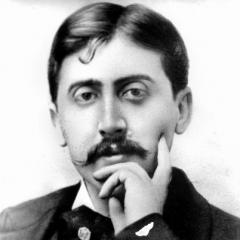
Marcel Proust was a French novelist renowned for his magnum opus, 'In Search of Lost Time'. This novel is considered a classic of 20th-century literature, known for its intricate psychological portrayals and profound exploration of memory. more
You May Also Like
“I have learned that chances don’t always come to you; sometimes you have to create your own.”
“Don't be afraid of being different be afraid of being like everyone else !”
“Without our individual kinks we would all be flat as boards.”