Quotessence
Home / Quotes / Quote by Elizabeth von Arnim

Quote by Elizabeth von Arnim

“J'ai une passion pour les tulipes, plus que pour aucune autre fleur de printemps; gaies, robustes, gracieuses, elles semblent de jeunes filles sortant du bain à côté des jacinthes, ces femmes aux formes opulentes dont chaque mouvement sature l'air de patchouli. Leur parfum, délicat et léger, est un comble de raffinement. Existe-t-il au monde rien de plus charmant que l'ardeur avec laquelle elles tendent leurs petits visages vers le soleil ? On les a taxées de prétention, et de vanité, alors que pour moi elles sont toute grâce et modestie, et ne sont coupables que de vouloir jouir de la vie sans craindre de regarder le soleil en face.”

Quote by Elizabeth von Arnim

Work

Elizabeth and Her German Garden

This book offers a unique perspective on the personal garden of Queen Elizabeth II, located in Germany. It provides insights into her gardening habits, the history of the garden, and the beauty of the landscape. The narrative is a blend of personal anecdotes and observations, offering readers a glimpse into the private life of the queen. more

Author
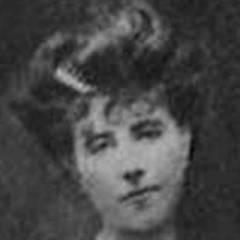
Elizabeth von Arnim
Elizabeth von Arnim

Elizabeth von Arnim, born on August 31, 1866, and died on February 9, 1941, was a prominent German novelist of the late 19th and early 20th centuries. Known for her unique female perspective and delicate emotional descriptions, she left a lasting impact on German literature. more

You May Also Like

“Because of the "city upon a hill" sound bite, "A Model of Christian Charity" is one of the formative documents outlining the idea of America. But dig deep into its communitarian ethos and it reads more like an America that might have been, an America fervently devoted to the quaint goals of working together and getting along. Of course, this America does exist. It's called Canada.”

“A minute afterwards he appeared upon the upper platform, still bearing the gipsy [sic] in his arms, still running wildly along, still shouting 'Sanctuary!' and the crowd still applauding. At last he made a third appearance on the summit of the tower of the great bell. From thence he seemed to show exultingly to the whole city the fair creature he had saved; and his thundering voice, that voice which was heard so seldom, and which he never heard at all, thrice repeated with frantic vehemence, even in the very clouds, 'Sactuary! Sanctuary! Sanctuary! The Hunchback of Notre Dame”

“Behold at a sign from heaven, because it comes from the Sun itself, those thousand churches trembling all at once. At first a faint tinkling passes from church to church...see how, all of a sudden, at the same moment, there rises from each steeple as it were a column of sound, a cloud of harmony. At first the vibration of each bell rises straight, pure, and in a manner separate from that of the others, into the splendid morning sky; then swelling by degrees, they blend, melt, intermingle, and amalgamate into a magnificent concert...this sea of harmony, however, is not chaos... This is truly an opera well worth listening to...In this case the city sings....Say if you know anything in the world more rich, more joyful, more golden, more overwhelming than that tumult of bells, than that furnace of music, than those ten thousand voices of bronze singing all at once from flutes of stone three hundred feet high, than that city which has become an orchestra, than that symphony which roars like a storm.”