Quotessence
Home / Quotes / Quote by George Eliot

Quote by George Eliot

“Within ourselves our evil will is momentous, and sooner or later it works its way outside us—it may be in the vitiation that breeds evil acts, but also it may be in the self-abhorrence that stings us into better striving.”

Quote by George Eliot

Work

Daniel Deronda

Daniel Deronda is a complex narrative that intertwines the lives of its characters with the broader social and political context of the time. The story follows Daniel, a young man raised by a Jewish family, as he navigates his identity and relationships amidst the backdrop of the British Empire's expansion and the rise of Zionism. more
Author

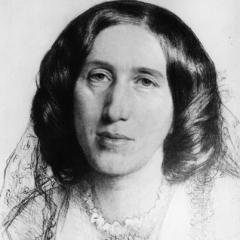
George Eliot
George Eliot

George Eliot, born Mary Ann Evans, was a renowned 19th-century British novelist. Her works are known for their profound psychological insights and critical exploration of social issues. With her unique narrative techniques and rich emotional expression, she has had a profound impact on literature. more

You May Also Like

“Something began to say to me, "He who passively accepts evil is as much involved in it as he who helps to perpetrate it. He who accepts evil without protesting against it is really coöperating with it." When oppressed people willingly accept their oppression they only serve to give the oppressor a convenient justification for his acts. Often the oppressor goes along unaware of the evil involved in his oppression so long as the oppressed accepts it. So in order to be true to one's conscience and true to God, a righteous man has no alternative but to refuse to coöperate with an evil system.”

“Like most of the students of Crozer [Theological Seminary], I felt that while war could never be a positive or absolute good, it could serve as a negative good in the sense of preventing the spread and growth of an evil force. War, horrible as it is, might be preferable to surrender to a totalitarian system—Nazi, Fascist, or Communist.”

“My study of Gandhi convinced me that true pacifism is not nonresistance to evil, but nonviolent resistance to evil. Between the two positions, there is a world of difference. Gandhi resisted evil with as much vigor and power as the violent resister, but he resisted with love instead of hate. True pacifism is not unrealistic submission to evil power, as [Reinhold] Niebuhr contends. It is rather a courageous confrontation of evil by the power of love, in the faith that it is better to be the recipient of violence than the inflicter of it, since the latter only multiplies the existence of violence and bitterness in the universe, while the former may develop a sense of shame in the opponent, and thereby bring about a transformation and change of heart.”

“A third characteristic of this method is that the attack is directed against forces of evil rather than against persons who happen to be doing the evil. It is evil that the nonviolent resister seeks to defeat, not the persons victimized by evil. If he is opposing racial injustice, the nonviolent resister has the vision to see that the basic tension is not between races. As I like to say to the people in Montgomery: "The tension in this city is not between white people and Negro people. The tension is, at bottom, between justice and injustice, between the forces of light and the forces of darkness. And if there is a victory, it will be a victory not merely for fifty thousand Negroes, but a victory for justice and the forces of light. We are out to defeat injustice and not white persons who may be unjust.”

“To accept passively an unjust system is to coöperate with that system; thereby the oppressed become as evil as the oppressor. Nocoöperation with evil is as much a moral obligation as is coöperation with good. The oppressed must never allow the conscience of the oppressor to slumber. Religion reminds every man that he is his brother's keeper. To accept injustice or segregation passively is to say to the oppressor that his actions are morally right. It is a way of allowing his conscience to fall asleep.”