Quotessence
Home / Quotes / Quote by Herman Melville

Quote by Herman Melville

“Look not too long in the face of the fire O man! Never dream with thy hand on the helm! Turn not thy back to the compass; accept the first hint of the hitching tiller; believe not the artificial fire, when its redness makes all things look ghastly. Tomorrow, in the natural sun, the skies will be bright; those who glared like devils in the forking flames, the morn will show in far other, at least gentler relief; the glorious, golden, glad sun, the only true lamp - all others but liars!”

Quote by Herman Melville

Work

Moby Dick

Moby Dick is a profound and complex novel that explores themes of obsession, fate, and the human condition. The story is narrated by Ishmael, a young man who signs on as a crew member of the Pequod, a whaling ship captained by the obsessed Ahab. The journey is fraught with danger and moral dilemmas, as the crew faces the perils of the sea and the relentless pursuit of their nemesis. The novel is renowned for its vivid descriptions of the ocean and its creatures, as well as its philosophical and existential musings. more
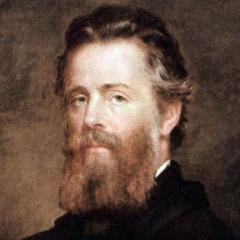
Author

Herman Melville
Herman Melville

Herman Melville was a renowned 19th-century American novelist known for his profound psychological descriptions and unique literary style. His masterpiece, 'Moby-Dick', is considered a classic of American literature. more

You May Also Like

“As Father, the authority he claims for himself is the authority of compassion. That authority comes from letting the sins of his children pierce his heart. There is no lust, greed, anger, resentment, jealousy, or vengeance in his lost children that has not cause immense grief to his heart. The grief is so deep because the heart is so pure. From the deep inner place where love embraces all human grief, the Father reaches out to his children. The touch of his hands, radiating inner light, seeks only to heal. Here is the God I want to believe in: a Father who, from the beginning of creation, has stretched out his arms in merciful blessing, never forcing himself on anyone, but always waiting; never letting his arms drop down in despair, but always hoping that his children will return so that he can speak words of love to them and let his tired arms rest on their shoulders. His only desire is to bless. In Latin, to bless is benedicere, which means literally: saying good things. The Father wants to say, more with his touch than with his voice, good things of his children. He has no desire to punish them. They have always been punished excessively by their own inner or outer waywardness. The Father wants simply to let them know that the love they have searched for in such distorted ways has been, is, and always will be there for them. The Father wants to say, more with his hands than with his mouth: 'You are my Beloved, on you my favor rests.' He is the shepherd, 'feeding his flock, gathering lambs in his arms, holding them against his breast.' The true center of Rembrandt's painting is the hands of the father.”