Quotessence
Home / Quotes / Quote by George Herbert

Quote by George Herbert

Work

The Complete Poetry

This volume presents the complete collection of poetry by an individual poet, bringing together all known poems, verses, and lyrical works into one definitive edition. Such collections typically include the author's major poetry collections previously published separately, as well as any unpublished, lesser-known, or newly discovered poems compiled from various sources. The arrangement often follows chronological order or the poet's own preferred organization, sometimes including early works, transitional pieces, and later compositions. A complete poetry edition serves as a reference for scholars, students, and general readers seeking to engage with the full breadth of a poet's artistic output and poetic evolution over time. more
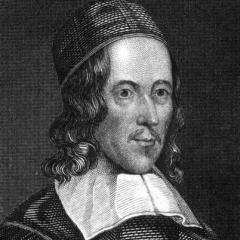
Author

George Herbert
George Herbert

George Herbert, a renowned English poet, was born on April 3, 1593, and died on March 1, 1633. Known for his religious poetry, Herbert's works blend personal faith with profound philosophy, exerting a profound influence on poetry in the postmodern era. more

You May Also Like

“The Devil wants to hurt us, and if he can't take our lives, he will try to take our peace... I had to choose faith over fear... Joy is found in God and his good plans for me. Looking for the joy takes my focus off all the things that make me anxious. But it wasn't easy then, and it still takes work now.”

“An individual who is rooted in his inner self is always blissful. Through awareness, the meditator continuously experiences the blissful self.  An individual who is experiencing centeredness and bliss can also be surrounded by unhappiness, but he is not identified with unhappiness. The meditator is rooted in bliss through awareness. Through awareness, the experience of bliss can be found. Awareness is the method through which you can recognize your true nature,”

“Always I find when I begin to write there is one character who obstinately will not come alive. There is nothing psychologically false about him, but he sticks, he has to be pushed around, words have to be found for him, all the technical skill I have acquired through laborious years has to be employed in making him appear alive to my readers { } He never does the unexpected thing, he never surprises me, he never takes charge. Every other character helps. He only hinders [ ]. And yet I cannot do without him. I can imagine a God feeling in just the same way about us. The saints, one would suppose, in a sense create themselves. They come alive. They are capable of the surprising act or word, they stand outside the plot, unconditioned by it. But we have to be pushed around. We have the obstinancy of nonexistence. We are inextricable bound to the plot, and wearily God forces us, here and there, according to his intention, characters without poetry, without free will, whose only importance is that somewhere, at some time, we help to furnish the scene in which a living character moves and speaks, providing perhapsthe saints with the opportunities for their free will.”