Quotessence
Home / Quotes / Quote by David Nicholls

Quote by David Nicholls

“Over-familiar, the music has become a kind of audio-Valium, background music rather than something I listen to actively and attentively. A gin and tonic after a long day. A shame, I think, because while each note remains the same, I used to hear them differently. It used to sound better.”

Quote by David Nicholls

Author
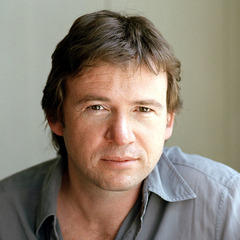
David Nicholls
David Nicholls

David Nicholls is a renowned British novelist known for his delicate emotional portrayal and unique narrative style. His works often focus on modern interpersonal relationships and emotional entanglements, which are highly appreciated by readers. more

You May Also Like

“Once upon a time we all walked on the golden road. It was a fair highway, through the Land of Lost Delight; shadow and sunshine were blessedly mingled, and every turn and dip revealed a fresh charm and a new loveliness to eager hearts and unspoiled eyes. On that road we heard the song of morning stars; we drank in fragrances aerial and sweet as a May mist; we were rich in gossamer fancies and iris hopes; our hearts sought and found the boon of dreams; the years waited beyond and they were very fair; life was a rose-lipped comrade with purple flowers dripping from her fingers. We may long have left the golden road behind, but its memories are the dearest of our eternal possessions; and those who cherish them as such may haply find a pleasure in the pages of this book, whose people are pilgrims on the golden road of youth.”

“I have a habit of being an archaeologist of my own past, a sentimental collector of personal artefacts which may at first glance appear random, but each of which holds a unique significance. As the years pass me by, I find that the number of objects within my possession begins to accumulate. A torn map. A sealed letter. A boat full of paper animals. Each item encapsulates within itself a story, akin to an outward manifestation of my inner journey.”

“There was an irony and a paradox here: Franco thought of Pontito constantly, saw it in fantasy, depicted it, as infinitely desirable – and yet he had a profound reluctance to return. But it is precisely such a paradox that lies at the heart of nostalgia – for nostalgia is about a fantasy that never takes place, one that maintains itself by not being fulfilled. And yet such fantasies are not just idle daydreams or fancies; they press toward some fulfillment, but an indirect one - the fulfillment of art. These, at least, are the terms that D. Geahchan, the French psychoanalyst, has used. With reference in particular to the greatest of nostalgies, Proust, the psychoanalyst David Werman speaks of an 'aesthetic crystallization of nostalgia' - nostalgia raised to the level of art and myth.”