Quotessence
Home / Quotes / Quote by Carlo M. Cipolla

Quote by Carlo M. Cipolla

“A questo punto, a costo di interrompere il filo del discorso, viene spontaneo un contro tra il destino dell’Inghilterra e quello dell’Italia. L’Inghilterra si ritrovò tra le mani ottima lana quando (nel Medioevo) la lana era la materia prima più ricercata; si ritrovò tra le mani ottimo ed abbondante carbone quando (ai tempi della Rivoluzione Industriale) la materia prima più preziosa era il carbone; e si ritrovò tra le mani il petrolio del mre del Nord quando (ai giorni nostri) il petrolio divenne la fonte di energia più usata nell’attività produttiva. In contrasto l’Italia ebbe poca e grama lana nel Medioevo, pochissimo e gramissimo carbone nella Rivoluzione Industriale, e pochissimo e gramissimo petrolio nell’epoca corrente: in compenso ebbe sempre abbondanza di marmo che usò soprattutto per adornare chiese ed erigere monumenti funerari nei cimiteri.”

Quote by Carlo M. Cipolla

Work

Author

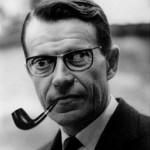
Carlo M. Cipolla
Carlo M. Cipolla

Carlo M. Cipolla was a widely influential scholar in the fields of history, economics, and sociology. His research focused on economic history and comparative historical analysis, particularly known for his studies on the economic and social changes during the Middle Ages and the Renaissance. more

You May Also Like

“I’m considering keeping the shutters open, even if people are spying on me at night from the apartment across the street. Especially if they are spying on me. It makes me feel less alone. I have a mental camaraderie with that imaginary person and their imaginary gaze. I find myself performing myself for them and exaggerating my facial expressions so they can see me more clearly, like actors project their voices on stage. I’m miming myself.”

“Se mai continga che 'l poema sacro al quale ha posto mano e cielo e terra, sì che m'ha fatto per molti anni macro, vinca la crudeltà che fuor mi serra del bello ovile ov'io dormi' agnello, nimico ai lupi che li danno guerra; con altra voce omai, con altro vello ritornerò poeta, e in sul fonte del mio battesmo prenderò 'l cappello”

“That's what lay behind the feud under way in the Republic: a battle between different noble family factions in a fight for power. Serving this side or the other was of no interest to Mathias. But the consequences of a Venice under the Pope's direct control weren't at all to his liking. His beloved books would be burned by ignorant, avid priests. Men like Malachia would win. It was the same old struggle. The same fight Gheorg had chosen, the same fight that might take him to Wittenberg. But he wouldn't clear the way for Alexander VI. With what little strength he possessed, even though he was nothing more than a pawn of a chessboard, that extended farther then he could see, Mathias would help those in power smash what had all the makings of a major plot, one designed to overturn the government in power in La Serenissima. And these thoughts allowed the monk to find the first answer to the many question with which he still felt burdened. He and the Borgias did NOT share the same Church.”

“Among the people, it was believed, as late as the present century, that spirits were imprisoned in statues. The statue of Neptune by Ammanati in the fountain of the Piazza della Signoria is called 'Il Biancone' or 'The Great White Man' by the poor people, who used to say that he was the mighty river god of the Arno tuned into statue because, like Michelangelo, he spurned the love of women. When the full moon shines on him, so the story goes, he comes to life and walks about the Piazza conversing with the other statues. Michelangelo's 'David', before it became a statue, used to be known as 'The Giant'. It was a great block of marble eighteen feet high that had been spoiled by Agostino di Duccio; personified by popular fancy, it lay for forty years in the workshops of the Cathedral, until Michelangelo made the Giant-Killer, that is, into a patriotic image of a small country defeating its larger foes. Giants, it was related, had built the great Etruscan stone wall of Fiesole, and many stories were told in Florence of beautiful maidens being turned into pure white marble statues.”

“So many memories come rushing over me as I stand here. They run through my mind like a movie…an old Italian movie. Some scenes are in black and white. Some are in vivid color. Some are silent…just images etched into my memory. Many are filled with laughter or tears. They all bring back the happiness of Terra d’Amore and a life in the paradise of my youth. The sights and the sounds and the smells are all returning to me now, filling up my senses, overwhelming my heart.”

“Nelle nostre società industriali noi consideriamo come popolazione attiva la popolazione nel gruppo di età 15-64. Anche questa è una definizione abbastanza arbitraria, derivante dal duplice fatto che a) in molti Paesi l’obbligo scolastico per i giovani si estende fino al quindicesimo compleanno, e che b) il sessantacinquesimo compleanno è per molte professioni il limite di pensionabilità. In realtà però ci sono individui che cominciano a lavorare molto dopo aver compiuto i 15 anni d’età e altri che cominciano prima. C’è gente che va in pensione prima di aver compiuto il sessantacinquesimo anno e c’è gente che lavora ancora a settant’anni. C’è gente che non ha mai lavorato e ci sono casi come quello della burocrazia italiana la quale rappresenta un campionario pittoresco di gente che si trova nel gruppo d’età 15-65 e prende regolarmente uno stipendio, ma la cui aggregazione alla «popolazione attiva» è frutto di una rosea violenza fatta dalla statistica alla realtà.”