Quotessence
Home / Quotes / Quote by Philip Pullman

Quote by Philip Pullman

Work

Fairy Tales from the Brothers Grimm: A New English Version

Browse quotes and source details for this work. more

Author
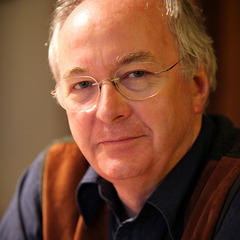
Philip Pullman
Philip Pullman

Philip Pullman is a British film writer known for his adaptations of literary works. Born in October 1946, he is a prolific writer who has adapted several renowned novels into film scripts. more

You May Also Like

“Fairy tales might not be history, but as I learned in the hours I spent in the library over Christmas break, Wilhelm and Jacob Grimm were historians. They didn’t invent their fairy tales—they collected them, writing down the folk tales and stories they heard from friends and servants, aristocrats and innkeepers’ daughters. Their first collection of stories was meant for grown-ups and I could see why—they’re way too bloody and creepy for children. Even the heroes go around boiling people in oil and feeding them red-hot coals. Imagine Disney making a musical version of “The Girl Without Hands,” a story about a girl whose widowed father chops off her hands when she refuses to marry him!”

“Groups of children gathered around them and gave them flowers and placed colored ribbons at their feet. After they were blessed at the wedding, they had a merry celebration, but the false mother and false bride had to leave. And the lips are still warm on the last person who told this tale. -The Children Of The Two Kings”

“Then I saw two greyhounds dragging a mill out of the water, and an old-worn-out horse stood there and said it was all right. And in the courtyard there were four horses threshing grain with all their might, and two goats were heating the stove, and a red cow shoved the bread into the oven. Then a chicken crowed, 'Cock-a-doodle doo! The tale is done, cock-a-doodle-doo!' -The Tale About The Land of Cockaigne”

“I don't know about you but I find I want to resist Buber here. Because personally I am pretty attached to my own feelings (and the complex, fascinating personality they imply). But even if I can't accept Buber totally here, I do find him a useful correction to some of my worse instincts. Looking at my life through a Buber lens, for example, I see that it is quite possible that my feelings, as strong as they may be, may disclose no more of reality to me than is afforded by the outline of my own self-image. This is useful knowledge. Every day I am confronted by situations in which I must judge the reality or otherwise of a situation by way of my feelings about it (this is especially acute in marital arguments). But just because I feel something very strongly, does this make it true? Isn't it possible that in may cases where my feelings are strong I may indeed be no different to all those delusional girls in the Bieber signing queue, who have so many feelings for him, after all, so very many sincere, deep, excruciating feelings, which are, of course, what define their identity, what makes of each of them Beliebers ...”