Quotessence
Home / Quotes / Quote by Colson Whitehead

Quote by Colson Whitehead

“Thursday night was soft and sugary, one of those perfect objects that summer doled out once in a while to torture you with how it could be all the time, if it cared. Pepper had known women like that, women stingy with the better parts of themselves, and perhaps there were those who'd say the same of him.”

Quote by Colson Whitehead

Work

Crook Manifesto

Browse quotes and source details for this work. more

Author

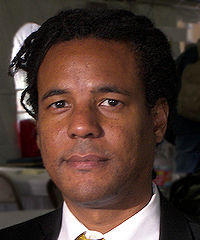
Colson Whitehead
Colson Whitehead

Colson Whitehead is an American novelist known for his distinctive literary style and profound insights into historical themes. His works cover a range of topics from slavery to modern urban life, with his 'New York Trilogy' and 'The Underground Railroad' being particularly notable. more

You May Also Like

“Safie related that her mother was a Christian Arab, seized and made a slave by the Turks; recommended by her beauty, she had won the heart of the father of Safie, who married her. The young girl spoke in high and enthusiastic terms of her mother, who, born in freedom, spurned the bondage to which she was now reduced. She instructed her daughter in the tenets of her religion and taught her to aspire to higher powers of intellect and an independence of spirit forbidden to the female followers of Mahomet. This lady died; but her lessons were indelibly impressed on the mind of Safie, who sickened at the prospect of again returning to Asia and being immured within the walls of a harem, allowed only to occupy herself with infantile amusements, ill-suited to the temper of her soul, now accustomed to grand ideas and a noble emulation of virtue. The prospect of marrying a Christian and remaining in a country where women were allowed to take a rank in society was enchanting to her.”

“In families of eating-disordered patients, the narcissistic use of the daughter by the mother is often immediately striking. Throughout the literature the degree of enmeshment or symbiosis between mother and daughter is remarked upon. Daughters are torn between the urgings of their own developmental strivings and their need to meet their mothers' narcissistic needs.”

“Historians who explore slavery's relationship to capitalism generally focus on the roles that men played in the development of both. But if we considered the very real possibility that some of the enslaved people these men compelled to work in southern cotton fields actually belonged to their wives, the narrative about American slavery and capitalism would be strikingly different. And when we consider that the enslaved people women owned before they married or acquired afterward helped make the nineteenth-century scale of southern cotton cultivation possible, the narrative of slavery, nineteenth-century markets, and capitalism as the domain of men becomes untenable.”