Quotessence
Home / Quotes / Quote by Upton Sinclair

Quote by Upton Sinclair

Work

The Jungle

This novel provides an in-depth look at the working conditions and exploitation faced by workers in the meatpacking industry during the early 20th century, offering a critical examination of the social and economic issues of the time. more
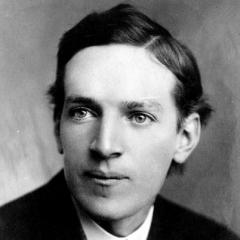
Author

Upton Sinclair
Upton Sinclair

Upton Sinclair was an American author, journalist, and political activist who became one of the most influential social critics of the early 20th century. His 1906 novel "The Jungle," which exposed the horrific conditions of the Chicago meatpacking industry, caused public outrage and directly led to the passage of the Pure Food and Drug Act. Sinclair wrote over 90 books throughout his life and won the Pulitzer Prize for Fiction in 1943 for "Dragon's Teeth." A committed socialist, he ran for governor of California and became a prominent voice for progressive reform in American society. more

You May Also Like

“Sitting in a corner, I live like a toad Oh! How I love my room: my tiny abode! Here I wake up; and I sleep in here The world far away; yet virtually near Not that I'm jailed in this place of grace Just don't want to face another face”

“Daisuke was the sort of man who, once he was disturbed by something, no matter what, could not let go of it until he had pursued it to the utmost. Moreover, having the capacity to assess the folly of any given obsession, he was forced to be doubly conscious of it. Three of four years ago he had tackled the question of the process whereby his waking mind entered the realm of dreams. At night, when he had gotten under the covers and begun to doze off nicely, he would immediately think, this is it, this is how I fall asleep. No sooner had he thought of this than he was wide awake. When he had managed to doze off again, he would immediately think, here it is. Night after night, he was plagued by his curiosity and would repeat the same procedure two or three times. In the end, he became disgusted in spite of himself. He wanted somehow to escape his agony. Moreover, he was thoroughly impressed by the extent of his folly. To appeal to his conscious mind in order to apprehend his unconscious, and to try to recollect both at the same time was, as James had put it, analogous to lighting a candle to examine the dark, or stopping a top in order to study is movements; at that rate, it stood to reason that he would never again be able to sleep. He knew all this, but when night came, he still thought, now...”