Quotessence
Home / Quotes / Quote by Ta-Nehisi Coates

Quote by Ta-Nehisi Coates

“Won't reparations divide us? Not any more than we are already divided. The wealth gap merely puts a number on something we feel but cannot say - that American propserity was ill-gotten and selective in its distribution. What is needed is an airing of family secrets, a settling with old ghosts. What is needed is a healing of the American psyche and the banishment of white guilt.”

Quote by Ta-Nehisi Coates

Work

Un conto ancora aperto

Browse quotes and source details for this work. more

Author
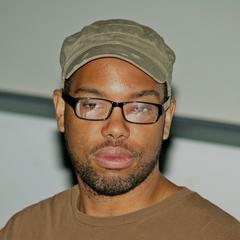
Ta-Nehisi Coates
Ta-Nehisi Coates

Ta-Nehisi Coates is an American writer known for his insightful social commentary and literary works. His writings often focus on themes of race, history, and social justice, with his most famous work being 'Between the World and Me', which won the Pulitzer Prize in 2015. more

You May Also Like

“In 2001, the Associated Press published a three-part investigation into the theft of black-owned land stretching back to the antebellum period. The series documented some 406 victims and 24,000 acres of land values at tends of millions of dollars. The land was taken through means ranging from legal chicanery to terrorism.”

“I choose to write because it's perfect for me. It's an escape, a place I can go to hide. It's a friend, when I feel out casted from everyone else. It's a journal, when the only story I can tell is my own. It's a book, when I need to be somewhere else. It's control, when I feel so out of control. It's healing, when everything seems pretty messed up. And it's fun, when life is just flat-out boring.”

“When I was a child, no one ever said the words "institutionalized racism." We hardly even said the word "racism." I don't think I took a single class in college that talked about the physiological effects of years of personally medicated racism and internalized racism. This was before studies came out that showed that black women were four times more likely to die from childbirth, before people were talking about epigenetics and whether or not trauma was heritable. If those studies were out there, I never read them. If those classes were offered, I never took them. There was little interest in these ideas back then because there was, there *is,* little interest in the lives of black people. What I'm saying is I didn't grow up with a language for, a way to explain, to parse out, my self-loathing. I grew up only with my part, my little throbbing stone of self-hate that I carried around with me to church, to school, to all those places in my life that worked, it seemed to me then, to affirm the idea that I was irreparably, fatally, wrong. I was a child who liked to be right.”

“I walked around those places, pious child that i was, thinking that my goodness was proof negative. "Look at me!" I wanted to shout. I wanted to be a living theorem, a Logos. Science and math had already taught me that if there was many exceptions to a rule, then the rule was not a rule. Look at me. This was all so wrongheaded, so backward, but I didn't know how to think any differently. The rule was never a rule, but I had mistaken it for one. I took me years of questioning and seeking to see more than my little piece, and even now I don't always see it.”