“While the founder [of any religious or spiritual system] was still walking among his followers and disciples, the latter did not distinguish between the person of their leader and his teaching; for the teaching was realized in the person and the person was livingly explained in the teaching. To embrace the teaching was to follow his steps - that is, to believe in him. His presence among them was enough to inspire them and convince them of the truth of his teaching... So long as he lived among them and spoke to them his teaching and his person appealed to them as an individual unity. But things went differently when his stately and inspiring personality was no more seen in the flesh... The similarities that were, either consciously or unconsciously, recognized as existing in various forms between leader and disciple gradually vanished, and as they vanished, the other side - that is, that which made him so distinctly different from his followers - came to assert itself all the more emphatically and irresistibly. The result was the conviction that he must have come from quite a unique spiritual source. The process of deification thus constantly went on until, some centuries after the death of the Master, he became a direct manifestation of the Supreme Being himself - in fact, he was the Highest One in the flesh, in him there was a divine humanity in perfect realization... Indeed, the teaching is to be interpreted in the light of the teacher's divine personality. The latter now predominates over the whole system; he is the centre whence radiate the rays of Enlightenment, salvation is only possible in believing in him as saviour.”
Quote by D.T. Suzuki
Work
Essays in Zen Buddhism, First Series
Browse quotes and source details for this work. more
Author
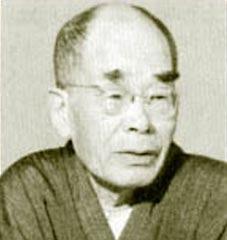
D.T. Suzuki
D.T. Suzuki, a renowned Japanese philosopher, Buddhist scholar, and translator, was born on October 18, 1870, and died on July 12, 1966. He is best known for his profound research into Zen Buddhism and his influential translations, which have greatly contributed to the Western understanding of Eastern philosophy and culture. more
You May Also Like
Source: The Secret History
Source: The Secret History
“Build ecosystems; networks that will help you grow”
Source: Change and Power
Source: Time Value of Money
Source: Soul Wisdom: A Guide to Miraculous Living
Source: Spirit In Disguise: A Guide to Miraculous Living, Book 2
Source: Soul Wisdom: A Guide to Miraculous Living
Source: Soul Wisdom: A Guide to Miraculous Living