Quotessence
Home / Quotes / Quote by M. Scott Peck

Quote by M. Scott Peck

Work

The Road Less Traveled: A New Psychology of Love, Traditional Values and Spiritual Growth

This book delves into the complexities of human relationships and self-improvement, offering readers a unique perspective on love, personal values, and spiritual development. more

Author
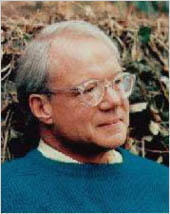
M. Scott Peck
M. Scott Peck

M. Scott Peck was an American psychiatrist and writer, best known for his book 'The Road Less Traveled', which delves into themes of personal growth, psychotherapy, and the human mind. His writing style has been widely appreciated, and his works have had a profound impact on the fields of psychology and philosophy. more

You May Also Like

“Letting potential hires choose which dimension is more important makes them feel like they have more of an active role in the process—and hopefully satisfies their need to negotiate. By letting candidates choose between two options the boss is equally happy with, potential hires feel like they have more autonomy without making the boss any worse off. It’s providing a menu: a limited set of options from which people can choose.”

“The typical characteristics of the egocentric mentality are arrogance and bravado, but even a submissive personality who is seemingly void of ego can also be self-centered and selfish. He is consumed by his own pain, filled with self-pity, and unable to feel anyone else’s pain while drowning in his own. Such a person experiences no real connection to anyone outside of himself, despite his seemingly noble nature. He will not—cannot—burden himself unless he receives a larger payout in the form of acceptance or approval. His taking is disguised as giving. His fear is dressed up as love. (He may also be motivated by the need to assuage feelings of guilt or inadequacy, yet still his aim is to reduce his own suffering, not someone else’s.)”

“If you give out of fear or guilt, your self-esteem is not enriched; indeed, it is only diminished. You aren’t really giving; the other person is taking. You are being taken advantage of, with your consent.”

“Self-esteem is keenly observed as a reflection of one’s relationships and manifests in three main domains: one’s history and patterns, interactions and exchanges, and borders and boundaries.”

“Reality begins to emerge only when we set aside our tendency to think in clean categories and realize that almost all things exist on a continuum. Along that continuum, answers change depending on time and context. An answer that’s closer to right today could be closer to wrong tomorrow.”

“If you can let contradictory thoughts dance with each other without your head exploding, they’ll produce a symphony brimming with additional music—in the form of new ideas—far superior to the original. When you adopt this mindset, you gain the magic of perspective and see through the smoke and mirrors created by one-dimensional stories. In the end, there’s so much beauty in complexity. A world of multitudes is far more interesting—and accurate—than a world of certitudes.”

“It took the most trivial of distinctions for the participants to divide themselves into “us” and “them.” Simply telling people that they belonged to one group and not the other was sufficient to trigger loyalty toward their own group and bias against the other.”

“Tribalism becomes dangerous when it turns rivals into enemies, when it suppresses diverse thinking, and when it pushes individuals to do things they wouldn’t do on their own. This type of dangerous tribalism thrives in a sea of disconnected people looking for belonging. And who doesn’t crave belonging these days? We are disconnected from our neighbors, disconnected from nature, disconnected from animals, disconnected from the universe, and disconnected from most things that make us human. Tribes are the magnet that attracts the metal of our craving to belong. They assure us that we’re right and morally superior. They force us into a different reality where it becomes impossible to see—let alone comprehend—another worldview. We become “the Few, the Proud, the More or Less Constantly Appalled at Everyone Else,” as David Foster Wallace put it.”

“Over time, the tribal identity becomes our identity. Once identity and tribe fuse, we let our tribe determine what’s appropriate for us to read, watch, say, and think. We pick up social-media cues about what our tribe is thinking, and we toe the line. If our tribe hates Joe Rogan, we hate him too. If our tribe believes that immigrants are destroying our country, we believe it too. We forfeit our voice. We forfeit our choice. That warm, fuzzy, satisfying feeling of belonging trumps everything else—including thinking for ourselves.”