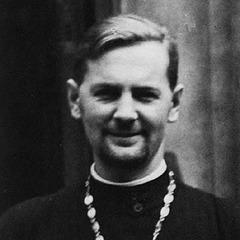
“In the Orthodox ecclesial experience and tradition a sacrament is understood primarily as a revelation of the genuine nature of creation, of the world, which, however much it has fallen as "this world," will remain God's world, awaiting salvation, redemption, healing and transfiguration in a new earth and a new heaven. In other words, in the Orthodox experience a sacrament is primarily a revelation of the sacramentality of creation itself, for the world was created and given to man for conversion of creaturely life into participation in divine life. If in baptism water can become a "laver of regeneration," if our earthy food - bread and wine - can be transformed into partaking of the body and blood of Christ, if with oil we are granted the anointment of the Holy Spirit, if, to put it briefly, everything in the world can be identified, manifested and understood as a gift of God and participation in the new life, it is because all of creation was originally summoned and destined for the fulfillment of the divine economy - "then God will be all in all.” CreationGoodnessOrthodoxSacrament Book:The Eucharist: Sacrament of the Kingdom Source: The Eucharist: Sacrament of the Kingdom
“The liturgy of the Eucharist is best understood as a journey or procession. It is the journey of the Church into the dimension of the Kingdom. We use the word 'dimension' because it seems the best way to indicate the manner of our sacramental entrance into the risen life of Christ. Color transparencies 'come alive' when viewed in three dimensions instead of two. The presence of the added dimension allows us to see much better the actual reality of what has been photographed. In very much the same way, though of course any analogy is condemned to fail, our entrance into the presence of Christ is an entrance into a fourth dimension which allows us to see the ultimate reality of life. It is not an escape from the world, rather it is the arrival at a vantage point from which we can see more deeply into the reality of the world.” RealityTruthCommunionKingdom Of GodEucharistSacrament Book:For the Life of the World: Sacraments and Orthodoxy Source: For the Life of the World: Sacraments and Orthodoxy
“A marriage which does not constantly crucify its own selfishness and self-sufficiency, which does not ‘die to itself’ that it may point beyond itself, is not a Christian marriage. The real sin of marriage today is not adultery or lack of ‘adjustment’ or ‘mental cruelty.’ It is the idolization of the family itself, the refusal to understand marriage as directed toward the Kingdom of God. This is expressed in the sentiment that one would ‘do anything’ for his family, even steal. The family has here ceased to be for the glory of God; it has ceased to be a sacramental entrance into his presence. It is not the lack of respect for the family, it is the idolization of the family that breaks the modern family so easily, making divorce its almost natural shadow. It is the identification of marriage with happiness and the refusal to accept the cross in it. In a Christian marriage, in fact, three are married; and the united loyalty of the two toward the third, who is God, keeps the two in an active unity with each other as well as with God. Yet it is the presence of God which is the death of the marriage as something only ‘natural.’ It is the cross of Christ that brings the self-sufficiency of nature to its end. But ‘by the cross, joy entered the whole world.’ Its presence is thus the real joy of marriage. It is the joyful certitude that the marriage vow, in the perspective of the eternal Kingdom, is not taken ‘until death parts,’ but until death unites us completely.” ChristianJesusChristMarriageOrthodoxyChristian MarriageSacrament Book:For the Life of the World: Sacraments and Orthodoxy Source: For the Life of the World: Sacraments and Orthodoxy