Quotessence
Home / Authors / Antonin Sertillanges Biography
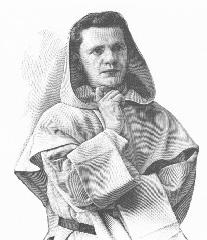
Antonin Sertillanges

Antonin Sertillanges Biography

Author

Related Quotes

“There are antecedent passion and consequent passion, that is, passion which precedes the use of reason or faith, and so hinders it; and passion which follows the exercise of reason or faith, and is of service to them. A man is in a state of anger at the moment when he ought to make a decision on an action; he decides badly, for anger blinds him. But when the decision is taken, and the man is wholly engaged in the performance, it may happen that a generous anger, kept within its proper limits, is a strength. What would we do without anger, without passion generally, on the battlefields either of war or of life?”

“Keep your soul free. What matters most in life is not knowledge, but character … There is a knowledge other than that which is of the domain of memory: the knowledge of how to live. Study must be an act of life, must serve life, must feel itself impregnated with life. Of the two kinds of men, those who endeavor to know something, and those who try to be someone, the palm is to the second. What we know is like a beginning, a rough sketch only; the man is the finished work.”

“Every work is great when it is in exact measure. A work that exceeds its proper limits is the least of all. We have said repeatedly that your work, your proper work, is unique; another man's work is equally so, do not interchange with him. You alone can do well what is laid upon you; you would do badly what your neighbor will do well. God is satisfied in all.”

“Could error arise from a true demonstration, and falsehood proceed from duly verified authority? In no domain could this easily happen, and when dealing with religious faith it could not happen at all. To say that religious faith is legitimate as a means of knowledge is to say that it is divine; for it has no value for those who proclaim it except what it derives from this transcendent origin. To say, on the other hand, that the use of the reason is legitimate and necessary, is to take the same thing as understood; for reason has no authority except as far as it represents the eternal order, that is to say, God once more. How could God be divided against Himself, teaching by revelation what He contradicts by the intelligence, and setting up in opposition to each other as two manifestly hostile things on the one side the Gospel, on the other the book of nature and of humanity, when these volumes, which we want to distinguish, are really the three volumes of one work? If the Gospel be properly understood—the living Gospel, I mean, such as the Church offers it—it cannot contradict nature, nor man, nor, consequently, that science which expresses them both. If science is in its own domain and operates according to its law, it cannot contradict the Gospel.”

“What wisdom and what virtue there is in judging oneself truly and in remaining oneself! You have a part that only you can play; and your business is to play it to perfection, instead of trying to force fortune. Our lives are not interchangeable. Equally by aiming too high and by falling too low, one misses the path to the goal. Go straight ahead, in your own way, with God for guide.”

“The man who is too isolated grows timid, abstracted, a little odd: He stumbles along amid realities like a sailor who has just come off his ship; he has lost the sense of the human lot; he seems to look on you as if you were a "proposition" to be inserted in a syllogism, or an example to be put down in a notebook.”

“Friendship is an obstetric art; it draws out our richest and deepest resources; it unfolds the wings of our dreams and hidden indeterminate thoughts; it serves as a check on our judgements, tries out our new ideas, keeps up our ardor, and inflames our enthusiasm.”

“It is a painful thing to say to oneself: by choosing one road I am turning my back on a thousand others. Everything is interesting; everything might be useful; everything attracts and charms a noble mind; but death is before us; mind and matter make their demands; willy-nilly we must submit and rest content as to things that time and wisdom deny us, with a glance of sympathy which is another act of our homage to the truth.”