Quotessence
Home / Authors / Daniel Levitin
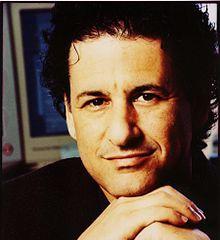
Daniel Levitin

Daniel Levitin Quotes

Neuroscientist

Filter quotes by topic

Famous Daniel Levitin Quotes

“Ten thousand hours is equivalent to roughly three hours a day, or 20 hours a week, of practice over 10 years... No one has yet found a case in which true world-class expertise was accomplished in less time. It seems that it takes the brain this long to assimilate all that it needs to know to achieve true mastery.”

“The brain has an attentional mode called the "mind wandering mode" that was only recently identified. This is when thoughts move seamlessly from one to another, often to unrelated thoughts, without you controlling where they go. This brain state acts as a neural reset button, allowing us to come back to our work with a refreshed perspective. Different people find they enter this mode in different ways: reading, a walk in nature, looking at art, meditating, and napping. A 15-minute nap can produce the equivalent of a 10-point boost in IQ.”

“Decision-making is difficult because, by its nature, it involves uncertainty. If there was no uncertainty, decisions would be easy! The uncertainty exists because we don't know the future, we don't know if the decision we make will lead to the best possible outcome. Cognitive science has taught us that relying on our gut or intuition often leads to bad decisions, particularly in cases where statistical information is available. Our guts and our brains didn't evolve to deal with probabilistic thinking.”

“The most important, the longest lasting, the strongest emotional, and the most practiced memories are the ones that are embedded the deepest in the brain, and because we have retrieved them so many times previously, they are the most able to be retrieved. We all hear about people who can remember their youth, their phone number, or street address from 70 years ago, but they cannot recall what they had for breakfast. The memory of this morning's breakfast wasn't rehearsed, and wasn't very important, so it fades away quickly.”

“The emerging picture from such studies is that ten thousand hours of practice is required to achieve the level of mastery associated with being a world-class expert - in anything. In study after study, of composers, basketball players, fiction writers, ice skaters, concert pianists, chess players, master criminals, and what have you, this number comes up again and again…no one has yet found a case in which true world-class expertise was accomplished in less time. It seems that it takes the brain this long to assimilate all that it needs to know to achieve true mastery.”