Quotessence
Home / Authors / Daniel Levitin
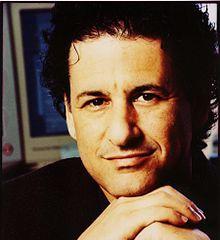
Daniel Levitin

Daniel Levitin Quotes

Neuroscientist

Filter quotes by topic

Famous Daniel Levitin Quotes

“Those dabs of paint and lines become art when form and flow are created out of lower-level perceptual elements. When they combine harmoniously they give rise to perspective, foreground and background, and ultimately to emotion and other aesthetic attributes.”

“Ten thousand hours is equivalent to roughly three hours a day, or 20 hours a week, of practice over 10 years... No one has yet found a case in which true world-class expertise was accomplished in less time. It seems that it takes the brain this long to assimilate all that it needs to know to achieve true mastery.”

“Whenever humans come together for any reason, music is there: weddings, funerals, graduation from college, men marching off to war, stadium sporting events, a night on the town, prayer, a romantic dinner, mothers rocking their infants to sleep ... music is a part of the fabric of everyday life.”

“A song playing comprises a very specific and vivid set of memory cues. Because the multiple-trace memory models assume that context is encoded along with memory traces, the music that you have listened to at various times of your life is cross-coded with the events of those times. That is, the music is linked to events of the time, and those events are linked to the music.”

“Love is about feeling that there is something bigger than just ourselves and our own worries and existence. Whether it is love of another person, of country, of God, of an idea, love is fundamentally an intense devotion to this notion that something is bigger than us. Love is ultimately larger than friendship, comfort, ceremony, knowledge, or joy. Indeed, as the Four Wise Ones once said, it may be all you need.”

“The brain has an attentional mode called the "mind wandering mode" that was only recently identified. This is when thoughts move seamlessly from one to another, often to unrelated thoughts, without you controlling where they go. This brain state acts as a neural reset button, allowing us to come back to our work with a refreshed perspective. Different people find they enter this mode in different ways: reading, a walk in nature, looking at art, meditating, and napping. A 15-minute nap can produce the equivalent of a 10-point boost in IQ.”

“Decision-making is difficult because, by its nature, it involves uncertainty. If there was no uncertainty, decisions would be easy! The uncertainty exists because we don't know the future, we don't know if the decision we make will lead to the best possible outcome. Cognitive science has taught us that relying on our gut or intuition often leads to bad decisions, particularly in cases where statistical information is available. Our guts and our brains didn't evolve to deal with probabilistic thinking.”

“Although it is easier to find information these days, it is easier than ever before to find misinformation, pseudo-facts, unsupported and fringe opinions, and the like. Children should be taught at an early age what constitutes evidence, how to detect biases or distortions in newspaper accounts, and that there exist hierarchies of information sources. In the medical field, for example, a controlled experiment published in a peer-reviewed journal is a better source than a blog by the Ginseng Growers Association, promoting the health benefits of their own product.”

“In order to be a world-class expert in anything, be it audiology, drama, music, art, gymnastics, whatever, one needs to have a minimum of 10,000 hours of practice. Unfortunately, it doesn't mean that if you put in 10,000 hours that you will become an expert, but there aren't any cases where someone has achieved world-class mastery without it! So the time spent at the activity is indeed the most important and influential factor.”

“For the artist, the goal of the painting or musical composition is not to convey literal truth, but an aspect of a universal truth that if successful, will continue to move and to touch people even as contexts, societies and cultures change. For the scientist, the goal of a theory is to convey "truth for now"--to replace an old truth, while accepting that someday this theory, too, will be replaced by a new "truth," because that is the way science advances.”

“The most important, the longest lasting, the strongest emotional, and the most practiced memories are the ones that are embedded the deepest in the brain, and because we have retrieved them so many times previously, they are the most able to be retrieved. We all hear about people who can remember their youth, their phone number, or street address from 70 years ago, but they cannot recall what they had for breakfast. The memory of this morning's breakfast wasn't rehearsed, and wasn't very important, so it fades away quickly.”

“We really are living in an age of information overload. Google estimates that there are 300 exabytes (300 followed by 18 zeros) of human-made information in the world today. Only four years ago there were just 30 exabytes. We've created more information in the past few years than in all of human history before us.”

“You'd think people would realize they're bad at multitasking and would quit. But a cognitive illusion sets in, fueled in part by a dopamine-adrenaline feedback loop, in which multitaskers think they are doing great.”

“People are trying to build a society where they can talk across the aisle so to speak, and have civil discourse. At the same time we're trying to inform ourselves about what's really true so that we can make evidence based decisions that is better than superstition or rumor. But the fact is that people who use evidence based decision making have much better life outcomes, greater life satisfaction, they live longer, they make better personal and medical decisions, better financial decisions. But parallel to that is you can't reason somebody out of a position they didn't reason themselves into.”

“Most of what we know we don't really know first hand. I've never seen a cancer cell. But I trust this community of experts who have, so I believe that cancer exists. But we trust these experts, and we trust that the experts have a system of checks and balances and self-correction. And we have to insist that experts have certain certifications. They're not perfect. Every once in awhile there's an engine falls off the wing of a plane, or a tax audit happens and you find out your expert made a mistake. But it's a pretty good system. It's the best system we've got.”

“The emerging picture from such studies is that ten thousand hours of practice is required to achieve the level of mastery associated with being a world-class expert - in anything. In study after study, of composers, basketball players, fiction writers, ice skaters, concert pianists, chess players, master criminals, and what have you, this number comes up again and again…no one has yet found a case in which true world-class expertise was accomplished in less time. It seems that it takes the brain this long to assimilate all that it needs to know to achieve true mastery.”