Quotessence
Home / Authors / Fernando Pessoa
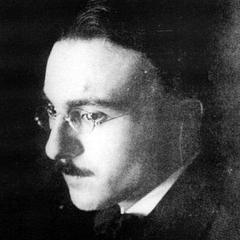
Fernando Pessoa

Fernando Pessoa Quotes

Poet

Filter quotes by topic

Famous Fernando Pessoa Quotes

“If one day I become financially secure, so that I can freely write and publish, I know I'll miss this precarious life in which I hardly write and don't publish at all. I'll miss it not only because it will be a life, however mediocre, that I'll never have again, but also because every sort of life has a special quality and particular pleasure, and when we take up another life, even a better one, that particular pleasure isn't as good, that special quality is less special, until they fade away, and there's something missing.”

“Most people are afflicted with an inability to say what they see or think. They say there’s nothing more difficult than to define a spiral in words; they claim it is necessary to use the unliterary hand, twirling it in a steadily upward direction, so that human eyes will perceive the abstract figure immanent in wire spring and a certain type of staircase. But if we remember that to say is to renew, we will have no trouble defining a spiral; it’s a circle that rises without ever closing. I realize that most people would never dare to define it this way, for they suppose that defining is to say what others want us to say rather than what’s required for the definition. I’ll say it more accurately: a spiral is a potential circle that winds round as it rises, without ever completing itself. But no, the definition is still abstract. I’ll resort to the concrete, and all will become clear: a spiral is a snake without a snake, vertically wound around nothing. All literature is an attempt to make life real. All of us know, even when we act on what we don’t know, life is absolutely unreal in its directly real form; the country, the city and our ideas are absolutely fictitious things, the offspring of our complex sensation of our own selves. Impressions are incommunicable unless we make them literary. Children are particularly literary, for they say what they feel not what someone has taught them to feel. Once I heard a child, who wished to say that he was on the verge of tears, say not ‘I feel like crying’, which is what an adult, i.e., an idiot, would say but rather, ’ I feel like tears.’ And this phrase -so literary it would seem affected in a well-known poet, if he could ever invent it - decisively refers to the warm presence of tears about to burst from eyelids that feel the liquid bitterness. ‘I feel like tears’! The small child aptly defined his spiral. To say! To know how to say! To know how to exist via the written voice and the intellectual image! This is all that matters in life; the rest is men and women, imagined loves and factitious vanities, the wiles of our digestion and forgetfulness, people squirming- like worms when a rock is lifted - under the huge abstract boulder of the meaningless blue sky.”

“I’ve always felt an almost physical loathing for secret things--intrigues, diplomacy, secret societies, occult sciences. What especially irks me are these last two things--the pretension certain men have that, through their understandings with Gods or Masters or Demiurges, they and they alone know the great secrets on which the world is founded. I can’t believe their claims, though I can believe someone else might. But is there any reason why all these people might not be crazy or deluded? The fact there are a lot of them proves nothing, for there are collective hallucinations. What really shocks me is how these wizards and masters of the invisible, when they write to communicate or intimate their mysteries, all write abominably. It offends my intelligence that a man can master the Devil without being able to master the Portuguese language. Why should dealing with demons be easier than dealing with grammar?”

“Literature --which is art married to thought, and realization untainted by reality--seems to me the end towards which all human effort would have to strive, if it were truly human and not just a welling up of our animal self. To express something is to conserve its virtue and take away its terror. Fields are greener in their description than in their actual greenness. Flowers, if described with phrases that define them in the air of the imagination, will have colours with a durability not found in cellular life.”

“I sometimes think, with a sad delight, that if one day, in a future I no longer belong to, these sentences, that I write, last with praise, I will at last have the people who understand me, those mine, the true family to be born in and be loved... I will only be understood in effigy, when affection no longer repays the dead the unaffection that was, when living.”

“I'm astounded whenever I finish something. Astounded and distressed. My perfectionist instinct should inhibit me from finishing; it should inhibit me from even beginning. But I get distracted and start doing something. What I achieve is not the product of an act of my will but of my will's surrender. I begin because I don't have the strength to think; I finish because I don't have the courage to quit. This book is my cowardice.”

“In the ordinary jumble of my literary drawer, I sometimes find texts I wrote ten, fifteen, or even more years ago. And many of them seem to me written by a stranger: I simply do not recognize myself in them. There was a person who wrote them, and it was I. I experienced them, but it was in another life, from which I just woke up, as if from someone else's dream.”

“We may know that the work we continue to put off doing will be bad. Worse, however, is the work we never do. A work that’s finished is at least finished. It may be poor, but it exists, like the miserable plant in the lone flowerpot of my neighbour who’s crippled. That plant is her happiness, and sometimes it’s even mine. What I write, bad as it is, may provide some hurt or sad soul a few moments of distraction from something worse. That’s enough for me, or it isn’t enough, but it serves some purpose, and so it is with all of life.”

“Sadly I write in my quiet room, alone as I have always been, alone as I will always be. And I wonder if my apparently negligible voice might not embody the essence of thousands of voices, the longing for self expression of thousands of lives, the patience of millions of souls resigned like my own to their daily lot, their useless dreams, and their hopeless hopes.”

“A great emotion is too selfish ; it takes into itself all the blood of the spirit, and the congestion leaves the hands too cold to write. Three sorts of emotion produce great poetry - strong but quick emotions, seized upon for art as soon as they have passed, but not before they have passed ; strong and deep emotions in their remembrance along time after ; and false emotions, that is to say, emotions felt in the intellect. Not insincerity, but a translated sincerity, is the basis of all art.”