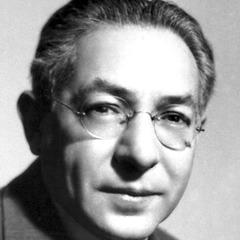
Isidor Isaac Rabi
Isidor Isaac Rabi was a renowned physicist, born on July 29, 1898, and died on January 11, 1988. He made significant contributions to the fields of atomic nucleus magnetic resonance and quantum mechanics.
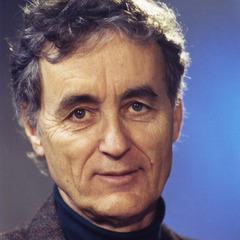
Isidor Isaac Rabi was a renowned physicist, born on July 29, 1898, and died on January 11, 1988. He made significant contributions to the fields of atomic nucleus magnetic resonance and quantum mechanics.
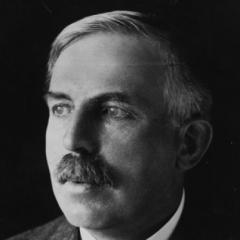
Ernest Rutherford, a British physicist, is renowned as the founder of nuclear physics. Born on August 30, 1871, in New Zealand, he passed away on October 19, 1937, in the United Kingdom. Rutherford made significant breakthroughs in the study of radioactivity, proposed the nuclear model of the atom, and discovered the proton.
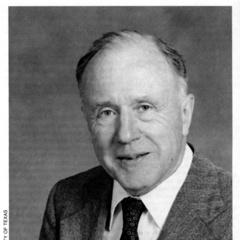
John Archibald Wheeler was a renowned theoretical physicist known for his contributions to the fields of general relativity and quantum mechanics. He also conducted significant research in atomic nucleus physics, particle physics, and cosmology, which had a profound impact on the development of modern physics.
George Iles (1852-1942) was a renowned author from the United Kingdom. His works spanned a variety of fields, including history, literature, and philosophy. Iles was known for his in-depth research and attention to detail, and his works have had a profound impact on posterity.
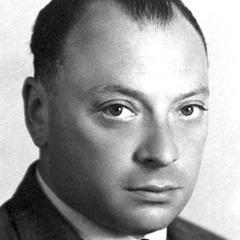
Wolfgang Pauli was a distinguished physicist born on April 25, 1900, and died on December 15, 1958. He is recognized for his substantial contributions to quantum mechanics, especially for the formulation of the Pauli exclusion principle. Pauli was awarded the Nobel Prize in Physics in 1945 for his work on the explanation of the fine structure of atomic spectra.
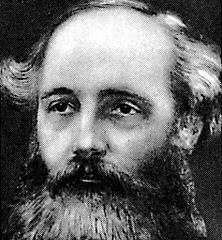
James Clerk Maxwell was an outstanding physicist known for his contributions to the field of electromagnetism. He formulated Maxwell's equations, which describe the properties of electromagnetic fields and predict the existence of electromagnetic waves. Maxwell's work has had a profound impact on modern physics and engineering.
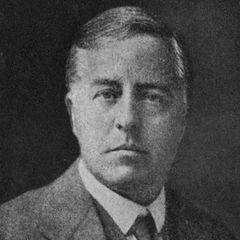
James Jeans was an influential British physicist known for his contributions to astrophysics and cosmology. His research encompassed stellar structure and the origins of the universe, having a profound impact on modern physics.
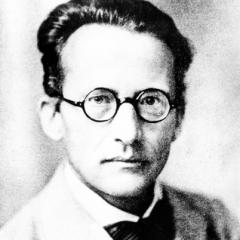
Austrian physicist and one of the key founders of quantum mechanics. His major contributions include the formulation of the Schrödinger equation, which had a profound impact on the development of quantum mechanics.
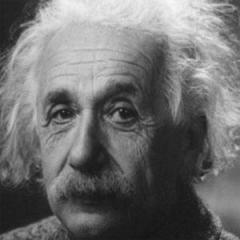
Albert Einstein, a German-born theoretical physicist, is renowned for his work on relativity and the photoelectric effect. His contributions revolutionized our understanding of the universe and had a profound impact on modern physics.
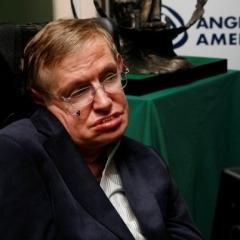
Stephen Hawking was a renowned British theoretical physicist known for his contributions to the fields of black hole theory and cosmology. Born on January 8, 1942, he overcame the challenges of ALS to become a global icon of science and perseverance.