Quotessence
Home / Authors / Fritjof Capra
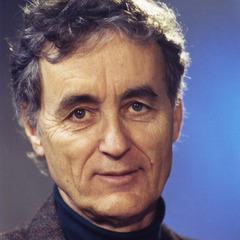
Fritjof Capra

Fritjof Capra Quotes

Physicist

Filter quotes by topic

Famous Fritjof Capra Quotes

“The new paradigm may be called a holistic world view, seeing the world as an integrated whole rather than a dissociated collection of parts. It may also be called an ecological view, if the term "ecological" is used in a much broader and deeper sense than usual. Deep ecological awareness recognizes the fundamental interdependence of all phenomena and the fact that, as individuals and societies we are all embedded in (and ultimately dependent on) the cyclical process of nature.”

“My main professional interest during the 1970s has been in the dramatic change of concepts and ideas that has occurred in physics during the first three decades of the century, and that is still being elaborated in our current theories of matter. The new concepts in physics have brought about a profound change in our world view; from the mechanistic conception of Descartes and Newton to a holistic and ecological view, a view which I have found to be similar to the views of mystics of all ages and traditions.”

“As Eastern thought has begun to interest a significant number of people, and meditation is no longer viewed with ridicule or suspicion, mysticism is being taken seriously even within the scientific community. An increasing number of scientists are aware that mystical thought provides a consistent and relevant philosophical background to the theories of Contemporary science, a conception of the world in which the scientific discoveries of men and women can be in perfect harmony with their spiritual aims and religious beliefs.”

“Quantum theory thus reveals a basic oneness of the universe. It shows that we cannot decompose the world into independently existing smallest units. As we penetrate into matter, nature does not show us any isolated "building blocks," but rather appears as a complicated web of relations between the various parts of the whole. These relations always include the observer in an essential way. The human observer constitute the final link in the chain of observational processes, and the properties of any atomic object can be understood only in terms of the object's interaction with the observer.”

“If physics leads us today to a world view which is essentially mystical, it returns, in a way, to its beginning, 2,500 years ago... This time, however, it is not only based on intuition, but also on experiments of great precision and sophistication, and on a rigorous and consistent mathematical formalism.”

“The mystic and the physicist arrive at the same conclusion; one starting from the inner realm, the other from the outer world. The harmony between their views confirms the ancient Indian wisdom that Brahman, the ultimate reality without, is identical to Atman, the reality within.”

“In Hinduism, Shiva the Cosmic Dancer, is perhaps the most perfect personification of the dynamic universe. Through his dance, Shiva sustains the manifold phenomena in the world, unifying all things by immersing them in his rhythm and making them participate in the dance - a magnificent image of the dynamic unity of the Universe.”

“Shallow ecology is anthropocentric, or human-centred. It views humans as above or outside nature, as the source of all value, and ascribes only instrumental, or 'use', value to nature. Deep ecology does not separate humans - or anything else - from the natural environment. It does see the world not as a collection of isolated objects but as a network of phenomena that are fundamentally interconnected and interdependent. Deep ecology recognizes the intrinsic value of all human beings and views humans as just one particular strand in the web of life.”

“In ordinary life, we are not aware of the unity of all things, but divide the world into separate objects and events. This division is useful and necessary to cope with our everyday environment, but it is not a fundamental feature of reality. It is an abstraction devised by our discriminating and categorising intellect. To believe that our abstract concepts of separate 'things' and 'events' are realities of nature is an illusion.”