Quotessence
Home / Authors / Fritjof Capra
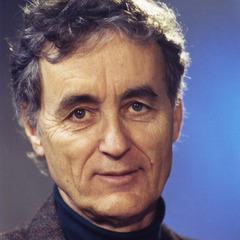
Fritjof Capra

Fritjof Capra Quotes

Physicist

Filter quotes by topic

Famous Fritjof Capra Quotes

“When carbon (C), Oxygen (o) and hydrogen (H) atoms bond in a certain way to form sugar, the resulting compound has a sweet taste. The sweetness resides neither in the C, nor in the O, nor in the H; it resides in the pattern that emerges from their interaction. It is an emergent property. Moreover, strictly speaking, is not a property of the chemical bonds. It is a sensory experience that arises when the sugar molecules interact with the chemistry of our taste buds, which in turns causes a set of neurons to fire in a certain way. The experience of sweetness emerges from that neural activity.”

“A diverse ecosystem will also be resilient, because it contains many species with overlapping ecological functions that can partially replace one another. When a particular species is destroyed by a severe disturbance so that a link in the network is broken, a diverse community will be able to survive and reorganize itself... In other words, the more complex the network is, the more complex its pattern of interconnections, the more resilient it will be.”

“Hundreds of years ago, Indian artists created visual images of dancing Shivas in a beautiful series of bronzes. In our time, physicists have used the most advanced technology to portray the patterns of the cosmic dance. The metaphor of the cosmic dance thus unifies ancient mythology, religious art and modern physics.”

“Gradually, physicists began to realise that nature, at the atomic level, does not appear as a mechanical universe composed of fundamental building blocks, but rather as a network of relations, and that, ultimately, there are no parts at all in this interconnected web. Whatever we call a part is merely a pattern that has some stability and therefore captures our attention.”

“The structure of the human brain is enormously complex. It contains about 10 billion nerve cells (neurons), which are interlinked in a vast network through 1,000 billion junctions (synapses). The whole brain can be divided into subsections, or sub-networks, which communicate with each other in a network fashion. All this results in intricate patterns of intertwined webs, networks of nesting within larger networks.”