Quotessence
Home / Authors / Julian Barnes
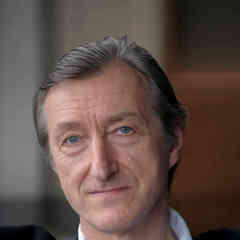
Julian Barnes

Julian Barnes Quotes

Writer

Filter quotes by topic

Famous Julian Barnes Quotes

“I'm interested in such things as the difference between how we perceive the world and what the world turns out to be. The difference is between the stories we tell others and the stories we tell ourselves. There is a wonderful Russian saying, which I use as the epigraph of one of my novels, which goes, He lies like an eyewitness. Which is very sly, clever and true.”

“He thought of trying to explain something he had recently noticed about himself: that if anyone insulted him, or one of his friends, he didn't really mind--or not much, anyway. Whereas if anyone insulted a novel, a story, a poem that he loved, something visceral and volcanic occurred within him. He wasn't sure what this might mean--except perhaps that he had got life and art mixed up, back to front, upside down.”

“Does character develop over time? In novels, of course it does: otherwise there wouldn't be much of a story. But in life? I sometimes wonder. Our attitudes and opinions change, we develop new habits and eccentricities; but that's something different, more like decoration. Perhaps character resembles intelligence, except that character peaks a little later: between twenty and thirty, say. And after that, we're just stuck with what we've got. We're on our own. If so, that would explain a lot of lives, wouldn't it? And also - if this isn't too grand a word - our tragedy.”

“We live on the flat, on the level, and yet - and so - we aspire. Groundlings, we can sometimes reach as far as the gods. Some soar with art, others with religion; most with love. But when we soar, we can also crash. There are few soft landings. We may find ourselves bouncing across the ground with leg-fracting force, dragged towards some foreign railway line. Every love story is a potential grief story. If not at first, then later. If not for one, then for the other. Sometimes, for both.”

“It took me some years to clear my head of what Paris wanted me to admire about it, and to notice what I preferred instead. Not power-ridden monuments, but individual buildings which tell a quieter story: the artist's studio, or the Belle Epoque house built by a forgotten financier for a just-remembered courtesan.”