Quotessence
Home / Authors / Laurens van der Post Books
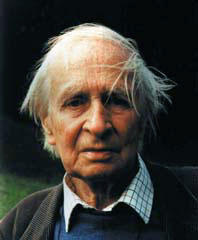
Laurens van der Post

Laurens van der Post Books

Author

Related Quotes

“Obviously he stood ready to speak for all. He was of course Karuso, and he began to bargain for the assembly with eloquence and great pertinacity. It was an affair that could not be hurried. The wage itself was a pretext, but the bargaining was important. Had I agreed immediately to the little money he demanded, all would have felt cheated and the poorer for it. The whole process was essentially a provision of wisdom and an affair of primitive honour that should not be minimized. It was a drama designed also to bring out the human factors to which Karuso was committing them all. I knew they would stop bargaining, not only when the wage seemed fair, but also when they felt they knew what kind of people we were.”

“Often I have found that the one thing that can save is the thing which appears most to threaten ... one has to go down into what one most fears and in that process ... comes a saving flicker of light and energy that, even if it does not produce the courage of a hero, at any rate enables a trembling mortal to take one step further.”

“I hear people everywhere saying that the trouble with our time is that we have no great leaders any more. If we look back we always had them. But to me it seems there is a very profound reason why there are no great leaders any more. It is because they are no longer needed. The message is clear. You no longer want to be led from the outside. Every man must be his own leader. He now knows enough not to follow other people. He must follow the light that's within himself, and through this light he will create a new community.”

“I suspect it was...the old story of the implacable necessity of a man having honour within his own natural spirit. A man cannot live and temper his mettle without such honour. There is deep in him a sense of the heroic quest; and our modern way of life, with its emphasis on security, its distrust of the unknown and its elevation of abstract collective values has repressed the heroic impulse to a degree that may produce the most dangerous consequences.”

“In a profound sense every man has two halves to his being; he is not one person so much as two persons trying to act in unison. I believe that in the heart of each human being there is something which I can only describe as a child of darkness who is equal and complementary to the more obvious child of light.”