Quotessence
Home / Authors / Ludwig Wittgenstein
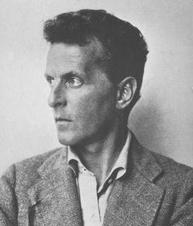
Ludwig Wittgenstein

Ludwig Wittgenstein Quotes

Philosopher

Filter quotes by topic

Famous Ludwig Wittgenstein Quotes

“6.1 The propositions of logic are tautologies. 6.2 Mathematics is a logical method. The propositions of mathematics are equations, and therefore pseudo-propositions. 6.3 The exploration of logic means the exploration of everything that is subject to law. And outside logic everything is accidental. 6.4 All propositions are of equal value. 6.5 When the answer cannot be put into words, neither can the question be put into words. The riddle does not exist. If a question can be framed at all, it is also possible to answer it.”

“6.4 All propositions are of equal value. 6.41 The sense of the world must lie outside the world. In the world everything is as it is, and everything happens as it does happen: in it no value exists—and if it did exist, it would have no value. If there is any value that does have value, it must lie outside the whole sphere of what happens and is the case. For all that happens and is the case is accidental. What makes it non-accidental cannot lie within the world, since if it did it would itself be accidental. It must lie outside the world. 6.42 So too it is impossible for there to be propositions of ethics. Propositions can express nothing that is higher. 6.43 If the good or bad exercise of the will does alter the world, it can alter only the limits of the world, not the facts—not what can be expressed by means of language. In short the effect must be that it becomes an altogether different world. It must, so to speak, wax and wane as a whole. The world of the happy man is a different one from that of the unhappy man. 6.44 It is not how things are in the world that is mystical, but that it exists. 6.45 To view the world sub specie aeterni is to view it as a whole—a limited whole. Feeling the world as a limited whole—it is this that is mystical.”

“Philosophy aims at the logical clarification of thoughts. Philosophy is not a body of doctrine but an activity. A philosophical work consists essentially of elucidations. Philosophy does not result in 'philosophical propositions', but rather in the clarification of propositions. Without philosophy thoughts are, as it were, cloudy and indistinct: its task is to make them clear and to give them sharp boundaries.”

“When philosophers use a word--"knowledge," "being," "object," "I," "proposition," "name"--and try to grasp the essence of the thing, one must always ask oneself: is the word ever actually used in this way in the language-game which is its original home?--What we do is to bring words back from their metaphysical to their everyday use.”

“My propositions serve as elucidations in the following way: anyone who understands me eventually recognizes them as nonsensical, when he has used them--as steps--to climb up beyond them. (He must, so to speak, throw away the ladder after he has climbed up it.) He must transcend these propositions, and then he will see the whole world aright.”

“Mathematics is a logical method. . . . Mathematical propositions express no thoughts. In life it is never a mathematical proposition which we need, but we use mathematical propositions only in order to infer from propositions which do not belong to mathematics to others which equally do not belong to mathematics.”