Quotessence
Home / Authors / Lysander Spooner
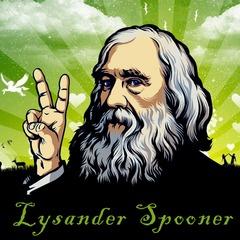
Lysander Spooner

Lysander Spooner Quotes

Philosopher

Filter quotes by topic

Famous Lysander Spooner Quotes

“Any government, that is its own judge of, and determines authoritatively for the people, what are its own powers over the people, is an absolute government of course. It has all the powers that it chooses to exercise. There is no other or at least no more accurate definition of a despotism than this.”

“It cannot be said that the Constitution formed 'the people of the United States,' for all time, into a corporation. It does not speak of 'the people' as a corporation, but as individuals. A corporation does not describe itself as 'we,' nor as 'people,' nor as 'ourselves.' Nor does a corporation, in legal language, have any 'posterity.'”

“The commerce of a free people is many times more valuable than that of slaves. Freemen produce and consume vastly more than slaves. They have therefore more to buy and more to sell. Hence the free states have a direct pecuniary interest in the civil freedom of all the other states. Commerce between free and slave states is not reciprocal or equal.”

“The trial by jury is a trial by 'the country,' in contradistinction to a trial by the government. The jurors are drawn by lot from the mass of the people, for the very purpose of having all classes of minds and feelings, that prevail among the people at large, represented in the jury.”

“And the men who loan money to governments, so called, for the purpose of enabling the latter to rob, enslave, and murder their people, are among the greatest villains that the world has ever seen. And they as much deserve to be hunted and killed (if they cannot otherwise be got rid of) as any slave traders, robbers, or pirates that ever lived.”

“Our constitutions purport to be established by 'the people,' and, in theory, 'all the people' consent to such government as the constitutions authorize. But this consent of 'the people' exists only in theory. It has no existence in fact. Government is in reality established by the few; and these few assume the consent of all the rest, without any such consent being actually given.”