Quotessence
Home / Authors / Lysander Spooner Books
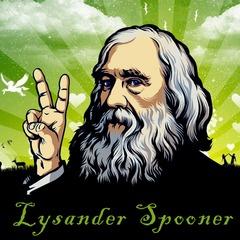
Lysander Spooner

Lysander Spooner Books

Philosopher

No Treason

A source page for quotes linked to Lysander Spooner.
0 quotes

Related Quotes

“And the whole power of the government must be limited to the maintenance of that single principle. And that one principle is justice. There is no other principle that any man can rightfully enforce upon others, or ought to consent to have enforced against himself. Every man claims the protection of this principle for himself, whether he is willing to accord it to others, or not. Yet such is the inconsistency of human nature, that some men—in fact, many men—who will risk their lives for this principle, when their own liberty or property is at stake, will violate it in the most flagrant manner, if they can thereby obtain arbitrary power over the persons or property of others. We have seen this fact illustrated in this country, through its whole history—especially during the last hundred years—and in the case of many of the most conspicuous persons. And their example and influence have been employed to pervert the whole character of the government. It is against such men, that all others, who desire nothing but justice for themselves, and are willing to unite to secure it for all others, must combine, if we are ever to have justice established for any.”

“N'importe quel groupe de scélérats, pourvu qu’ils aient assez d'argent pour l'entreprendre, peuvent décider qu'ils sont un gouvernement; car, pourvu qu'ils aient de l'argent, ils peuvent engager des soldats, et utiliser ces soldats pour extorquer davantage d'argent, et ainsi contraindre tout le monde à obéir à leurs volontés.”

“Comme l'impôt est obligatoire pour tous, qu'ils votent ou non, une large proportion de ceux qui votent le font sans aucun doute pour éviter que leur propre argent ne soit utilisé contre eux; alors que, en fait, ils se fussent volontiers abstenus de voter, si par là ils avaient pu échapper ne serait-ce qu'à l'impôt, sans parler de toutes les autres usurpations et tyrannies du gouvernement. Prendre le bien d'un homme sans son accord, puis conclure à son consentement parce qu'il tente, en votant, d'empêcher que son bien ne soit utilisé pour lui faire tort, voilà une preuve bien insuffisante de son consentement à soutenir la Constitution. Ce n'est en réalité aucunement une preuve. Puisque tous les hommes qui soutiennent la Constitution en votant (pour autant qu'il existe de tels hommes) le font secrètement (par scrutin secret), et de manière à éviter toute responsabilité personnelle pour l'action de leurs agents ou représentants, on ne saurait dire en droit ou en raison qu'il existe un seul homme qui soutienne la Constitution en votant. Puisque tout vote est secret (par scrutin secret), et puisque tout gouvernement secret est par nécessité une association secrète de voleurs, tyrans et assassins, le fait général que notre gouvernement, dans la pratique, opère par le moyen d'un tel vote prouve seulement qu'il y a parmi nous une association secrète de voleurs, tyrans et assassins, dont le but est de voler, asservir et -- s'il le faut pour accomplir leurs desseins -- assassiner le reste de la population. Le simple fait qu'une telle association existe ne prouve en rien que "le peuple des Etats-Unis", ni aucun individu parmi ce peuple, soutienne volontairement la Constitution. Les partisans visibles de la Constitution, comme les partisans visibles de la plupart des autres gouvernements, se rangent dans trois catégories, à savoir: 1. Les scélérats, classe nombreuse et active; le gouvernement est pour eux un instrument qu'ils utiliseront pour s'agrandir ou s'enrichir; 2. Les dupes -- vaste catégorie, sans nul doute, dont chaque membre, parce qu'on lui attribue une voix sur des millions pour décider ce qu'il peut faire de sa personne et de ses biens, et parce qu'on l'autorise à avoir, pour voler, asservir et assassiner autrui, cette même voix que d'autres ont pour le voler, l'asservir et l'assassiner, est assez sot pour imaginer qu'il est "un homme libre", un "souverain"; assez sot pour imaginer que ce gouvernement est "un gouvernement libre", "un gouvernement de l'égalité des droits", "le meilleur gouvernement qu'il y ait sur terre", et autres absurdités de ce genre; 3. Une catégorie qui a quelque intelligence des vices du gouvernement, mais qui ou bien ne sait comment s'en débarrasser, ou bien ne choisit pas de sacrifier ses intérêts privés au point de se dévouer sérieusement et gravement à la tâche de promouvoir un changement. Le fait est que le gouvernement, comme un bandit de grand chemin, dit à un individu: "La bourse ou la vie." Quantité de taxes, ou même la plupart, sont payées sous la contrainte d'une telle menace.”

“No principle, that is possible to be named, can be more self-evidently false than this; or more self-evidently fatal to all political freedom. Yet it triumphed in the field, and is now assumed to be established. If it really be established, the number of slaves, instead of having been diminished by the war, has been greatly increased; for a man, thus subjected to a government that he does not want, is a slave.”

“The 'nations,' as they are called, with whom our pretended ambassadors, secretaries, presidents, and senators profess to make treaties, are as much myths as our own. On general principles of law and reason, there are no such 'nations.' ... Our pretended treaties, then, being made with no legitimate or bona fide nations, or representatives of nations, and being made, on our part, by persons who have no legitimate authority to act for us, have intrinsically no more validity than a pretended treaty made by the Man in the Moon with the king of the Pleiades.”

“If those persons, who fancy themselves gifted with both the power and the right to define and punish other men's vices, would but turn their thoughts inwardly, they would probably find that they have a great work to do at home; and that, when that shall have been completed, they will be little disposed to do more towards correcting the vices of others, than simply to give to others the results of their experience and observation.”

“And there is no difference, in principle - but only in degree - between political and chattel slavery. The former, no less than the latter, denies a man's ownership of himself and the products of his labor; and asserts that other men may own him, and dispose of him and his property, for their uses, and at their pleasure.”

“All these cries of having "abolished slavery," of having "saved the country," of having "preserved the union," of establishing a "government of consent," and of "maintaining the national honor," are all gross, shameless, transparent cheats - so transparent that they ought to deceive no one.”

“All legitimate government is a mutual insurance company, voluntarily agreed upon by the parties to it, for the protection of their rights against wrong-doers. In its voluntary character it is precisely similar to an association for mutual protection against fire or shipwreck.”

“Any government, that is its own judge of, and determines authoritatively for the people, what are its own powers over the people, is an absolute government of course. It has all the powers that it chooses to exercise. There is no other or at least no more accurate definition of a despotism than this.”

“If any man's money can be taken by a so-called government, without his own personal consent, all his other rights are taken with it; for with his money the government can, and will, hire soldiers to stand over him, compel him to submit to its arbitrary will, and kill him if he resists.”

“A man's natural rights are his own, against the whole world; and any infringement of them is equally a crime, whether committed by one man, or by millions; whether committed by one man, calling himself a robber, (or by any other name indicating his true character,) or by millions, calling themselves a government.”

“Majorities, as such, afford no guarantees for justice. They are men of the same nature as minorities. They have the same passions for fame, power, and money, as minorities; and are liable and likely to be equally - perhaps more than equally, because more boldly - rapacious, tyrannical and unprincipled, if intrusted with power.”

“The rescue of a person, who is assaulted, or restrained of his liberty, without authority of law, is not only morally, but legally, a meritorious act; for every body is under obligation to go to the assistance of one who is assailed by assassins, robbers, ravishers, kidnappers, or ruffians of any kind.”