Quotessence
Home / Authors / Marcus du Sautoy
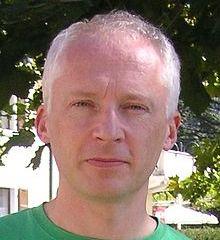
Marcus du Sautoy

Marcus du Sautoy Quotes

Professor

Filter quotes by topic

Famous Marcus du Sautoy Quotes

“If, years later, I do use the slit detector to observe which way the electron went, it will mean that many years earlier the electron must have passed through one slit or the other. But if I don't use the "slit detector," then the electron must have passed through both slits. This is, of course, extremely weird. My actions at the beginning of the twenty-first century can change what happened thousands of years ago when the electron began its journey. It seems that just as there are multiple futures, there are also multiple pasts, and my acts of observation in the present can decide what happened in the past. As much as it challenges any hope of ever really knowing the future, quantum physics asks whether I can ever really know the past. It seems that the past is also in a superposition of possibilities that crystallize only once they are observed.”

“The wave quality of light is the same as that of the electron. The wave determines the probable location of the photon of light when it is detected. The wave character of light is not vibrating stuff like a wave of water but rather a wavelike function encoding information about where you'll find the photon of light once it is detected. Until it reaches the detector plate, like the electron, it is seemingly passing through both slits simultaneously, making its mind up about its location only once it is observed [...]. It's this act of observation that is such a strange feature of quantum physics. Until I ask the detector to pick up where the electron is, the particle should be thought of as probabilistically distributed over space, with a probability described by a mathematical function that has wavelike characteristics. The effect of the two slits on this mathematical wave function alters it in such a way that the electron is forbidden from being located at some points on the detector plate. But when the particle is observed, the die is cast, probabilities disappear, and the particle must decide on a location.”

“One of the most curious consequences of quantum physics is that a particle like an electron can seemingly be in more than one place at the same time until it is observed, at which point there seems to be a random choice made about where the particle is really located. Scientists currently believe that this randomness is genuine, not just caused by a lack of information. Repeat the experiment under the same conditions and you may get a different answer each time.”