Quotessence
Home / Authors / Mary Renault
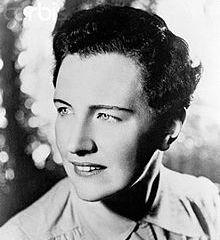
Mary Renault

Mary Renault Quotes

Writer

Filter quotes by topic

Famous Mary Renault Quotes

“Why, Anytos, I have fought as a democrat, here and in Samos, only because Sokrates taught me to think for myself. And Plato forsook the tyrants, though some were his kin, for Sokrates’ sake. He sets each man seeking the truth that is in him.” I could see him waiting for me to cease, to say what he had ready to say, exactly as if I had not spoken. I had felt easy with him, liking the way he treated every man as an equal; but it is strange to speak with someone one’s thoughts do not reach. Of a sudden it was as if a great desert surrounded me; I even felt the fear of Pan, driver of herds, as one does in lonely places.”

“Must we forsake the love of excellence, then, till every citizen feels it alike? I did not fight, Anytos, to be crowned where I have not run; but for a City where I can know who my equals really are, and my betters, to do them honour; where a man’s daily life is his own business; and where no one will force a lie on me because it is expedient, or some other man’s will.” The words seemed, as I spoke, to be my own thoughts that I owed to no one, only to some memory in my soul; but when I looked beyond the Stadium, to where they were kindling the lights on the High City in the falling dark, I saw the lamps of Samos shine through a doorway, and the wine-cup standing on the table of scoured wood. Then the pain of loss leaped out on me, like a knife in the night when one has been on one’s guard all day. The world grew hollow, a place of shadows; yet none would hold out the cup of Lethe to let me drink.”

“[...] y así les ocurre a los seguidores de los demás dioses. Cada hombre se esfuerza por honrar e imitar en su vida al dios a cuyo coro pertenecía, mientras permanece incorrupto en su primera encarnación; y en la manera que ha aprendido se muestra ante su amado y ante los demás. Así, cada uno escoge de entre los hermosos un amor que corresponde a su índole; y entonces, como si su elegido fuera su dios, lo eleva y lo viste para la adoración [...] y esta ansia por descubrir la esencia de su propio dios en sí mismos es recompensada, pues están obligados a mirar al dios sin vacilación, y cuando la memoria lo retiene, su respiración los inspira y comparten sus atributos y su vida, en la medida en que un hombre puede participar de la divinidad. Y por estas bendiciones dan gracias al amado y lo aman todavía más [...] y llena el alma del amado [...] Por lo tanto está enamorado, pero no sabe de quién; no sabe qué le ha sucedido, no lo entiende. Se ve en su amante como en un espejo, sin saber a quién ve. Y cuando están juntos también él se ve liberado del dolor, y cuando están separados añora como él es añorado; pues reflejada en su corazón está la imagen del amor, que es la respuesta del amor. Pero lo llama y lo considera no amor sino amistad [...]”

“Encontrar a Fedro guiando a Sócrates casi al mismo sitio, quizá lo era, le había impresionado profundamente. El árbol de amplia copa, la verde ladera en que recostarse, el agua fría al pie; sólo faltaban las ofrendas votivas y el santuario. «Concededme ser hermoso por dentro ―había suplicado Sócrates― y haced que las cosas exteriores e interiores se reconcilien».”