Quotessence
Home / Authors / Marcus Aurelius
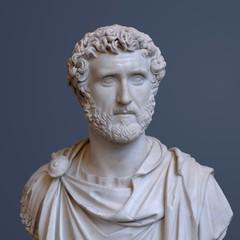
Marcus Aurelius

Marcus Aurelius Quotes

Roman emperor

Filter quotes by topic

Famous Marcus Aurelius Quotes

“Think of your many years of procrastination; how the gods have repeatedly granted you further periods of grace, of which you have taken no advantage. It is time now to realise the nature of the universe to which you belong, and of that controlling Power whose offspring you are; and to understand that your time has a limit set to it. Use it, then, to advance your enlightenment; or it will be gone, and never in your power again.”

“When people injure you, ask yourself what good or harm they thought would come of it. If you understand that, you'll feel sympathy rather than outrage or anger. Your sense of good and evil may be the same as theirs, or near it, in which case you have to excuse them. Or your sense of good and evil may differ from theirs. In which case they're misguided and deserve your compassion. Is that so hard?”

“Remember two things: i. that everything has always been the same, and keeps recurring, and it makes no difference whether you see the same things recur in a hundred years or two hundred, or in an infinite period; ii. that the longest-lived and those who will die soonest lose the same thing. The present is all that they can give up, since that is all you have, and what you do not have you cannot lose.”

“Don’t let yourself forget how many doctors have died, furrowing their brows over how many deathbeds. How many astrologers, after pompous forecasts about others’ ends. How many philosophers, after endless disquisitions on death and immortality. How many warriors, after inflicting thousands of casualties themselves. How many tyrants, after abusing the power of life and death atrociously, as if they were themselves immortal. How many whole cities have met their end: Helike, Pompeii, Herculaneum, and countless others. And all the ones you know yourself, one after another. One who laid out another for burial, and was buried himself, and then the man who buried him - all in the same short space of time. In short, know this: Human lives are brief and trivial. Yesterday a blob of semen; tomorrow embalming fluid, ash. To pass through this brief life as nature demands. To give it up without complaint. Like an olive that ripens and falls. Praising its mother, thanking the tree it grew on.”

“It is my bad luck that this has happened to me.' No, you should rather say: 'It is my good luck that, although this has happened to me, I can bear it without pain, neither crushed by the present nor fearful of the future.' Because such a thing could have happened to any man, but not every man could have borne it without pain. So why see more misfortune in the event than good fortune in your ability to bear it?”

“40. The gods either have power or they have not. If they have not, why pray to them? If they have, then instead of praying to be granted or spared such-and-such a thing, why not rather pray to be delivered from dreading it, or lusting for it, or grieving over it? Clearly, if they can help a man at all, they can help him in this way. You will say, perhaps, ‘But all that is something they have put in my own power.’ Then surely it were better to use your power and be a free man, than to hanker like a slave and a beggar for something that is not in your power. Besides, who told you the gods never lend their aid even towards things that do lie in our own power? Begin praying in this way, and you will see. Where another man prays ‘Grant that I may possess this woman,’ let your own prayer be, ‘Grant that I may not lust to possess her.’ Where he prays, ‘Grant me to be rid of such-and-such a one,’ you pray, ‘Take from me my desire to be rid of him.’ Where he begs, ‘Spare me the loss of my precious child,’ beg rather to be delivered from the terror of losing him. In short, give your petitions a turn in this direction, and see what comes.”

“Men seek retreats for themselves, houses in the country, sea-shores, and mountains; and thou too art wont to desire such things very much. But this is altogether a mark of the most common sort of men, for it is in thy power whenever thou shalt choose to retire into thyself. For nowhere either with more quiet or more freedom from trouble does a man retire than into his own soul, particularly when he has within him such thoughts that by looking into them he is immediately in perfect tranquility; and I affirm that tranquility is nothing else than the good ordering of the mind. Constantly then give to thyself this retreat, and renew thyself; and let thy principles be brief and fundamental, which, as soon as thou shalt recur to them, will be sufficient to cleanse the soul completely, and to send thee back free from all discontent with the things to which thou returnest. For with what art thou discontented? With the badness of men? Recall to thy mind this conclusion, that rational animals exist for one another, and that to endure is a part of justice, and that men do wrong involuntarily; and consider how many already, after mutual enmity, suspicion, hatred, and fighting, have been stretched dead, reduced to ashes; and be quiet at last.- But perhaps thou art dissatisfied with that which is assigned to thee out of the universe.- Recall to thy recollection this alternative; either there is providence or atoms, fortuitous concurrence of things; or remember the arguments by which it has been proved that the world is a kind of political community, and be quiet at last.- But perhaps corporeal things will still fasten upon thee.- Consider then further that the mind mingles not with the breath, whether moving gently or violently, when it has once drawn itself apart and discovered its own power, and think also of all that thou hast heard and assented to about pain and pleasure, and be quiet at last.- But perhaps the desire of the thing called fame will torment thee.- See how soon everything is forgotten, and look at the chaos of infinite time on each side of the present, and the emptiness of applause, and the changeableness and want of judgement in those who pretend to give praise, and the narrowness of the space within which it is circumscribed, and be quiet at last. For the whole earth is a point, and how small a nook in it is this thy dwelling, and how few are there in it, and what kind of people are they who will praise thee.”

“The time of a man's life is as a point; the substance of it ever flowing, the sense obscure; and the whole composition of the body tending to corruption. His soul is restless, fortune uncertain, and fame doubtful; to be brief, as a stream so are all things belonging to the body; as a dream, or as a smoke, so are all that belong unto the soul. Our life is a warfare, and a mere pilgrimage. Fame after life is no better than oblivion. What is it then that will adhere and follow? Only one thing, philosophy. And philosophy doth consist in this, for a man to preserve that spirit which is within him, from all manner of contumelies and injuries, and above all pains or pleasures; never to do anything either rashly, or feignedly, or hypocritically: only to depend from himself, and his own proper actions: all things that happen unto him to embrace contentendly, as coming from Him from whom he himself also came; and above all things, with all meekness and a calm cheerfulness, to expect death, as being nothing else but the resolution of those elements, of which every creature is composed. And if the elements themselves suffer nothing by their perpetual conversion of one into another, that dissolution, and alteration, which is so common unto all, why should it be feared by any? Is not this according to nature? But nothing that is according to nature can be evil.”

“What then, will a little fame distract you? Look at the speed of universal oblivion, the gulf of immeasurable time both before and after, the vacuity of applause, the indiscriminate fickleness of your apparent supporters, the tiny room in which all this is confined. The whole earth is a mere point in space: what a minute cranny within this is your own habitation, and how many and what sort will sing your praises here!”

“Look at the thousands of flocks and herds, the thousands of human ceremonies, every sort of voyage in storm or calm, the range of creation, combination, and extinction. Consider too the lives once lived by others long before you, the lives that will be lived after you, the lives lived now among foreign tribes; and how many have never even heard your name, how many will very soon forget it, how many may praise you now but quickly turn to blame. Reflect that neither memory nor fame, nor anything else at all, has any importance worth thinking of.”

“So discard all else and secure these few things only. remind yourself too that each of us lives only in the present moment, a mere fragment of time; the rest is life past or uncertain future. Sure, life is a small thing, and small the cranny of the earth in which we live it; small too even the longest fame thereafter, which is itself subject to a succession of little men who will quickly die, and have no knowledge event of themselves, let alone of those long dead.”

“Your children are no more than ‘leaves’. ‘Leaves’ too these loud voices of loyal praise, these curses from your opponents, this silent blame of mockery: mere ‘leaves’ likewise those with custody of your future fame. All these ‘come round in the season of spring’: but then the wind blows them down, and the forest ‘puts out others’ in their stead. All things are short-lived – this is their common lot – but you pursue likes and dislikes as if all was fixed for eternity. In a little while you too will close your eyes, and soon there will be others mourning the man who buries you.”

“The duration of a person’s life is only a moment; our substance is flowing away this very moment; the senses are dim; the composition of the body is decaying, the soul is chaos, our fate is unknowable, and reputation uncertain. In a word all bodily things are like a flowing river, and everything of the soul is dream and smoke, and life is all warfare and a stranger’s wanderings, and the reward is oblivion. What then could possibly guide us? Only one thing: Philosophy.”

“When you wake up in the morning, tell yourself: The people I deal with today will be meddling, ungrateful, arrogant, dishonest, jealous, and surly. They are like this because they can't tell good from evil. But I have seen the beauty of good, and the ugliness of evil, and have recognized that the wrongdoer has a nature related to my own - not of the same blood or birth, but the same mind, and possessing a share of the divine. And so none of them can hurt me. No one can implicate me in ugliness. Nor can I feel angry at my relative, or hate him. We were born to work together like feet, hands, and eyes, like the two rows of teeth, upper and lower. To obstruct each other is unnatural. To feel anger at someone, to turn your back on him: these are obstructions.”

“Do not disturb yourself by picturing your life as a whole; do not assemble in your mind the many and varied troubles which have come to you in the past and will come again in the future, but ask yourself with regard to every present difficulty: 'What is there in this that is unbearable and beyond endurance?' You would be ashamed to confess it! And then remind yourself that it is not the future or what has passed that afflicts you, but always the present, and the power of this is much diminished if you take it in isolation and call your mind to task if it thinks that it cannot stand up to it when taken on its own.”