“Men seek retreats for themselves, houses in the country, sea-shores, and mountains; and thou too art wont to desire such things very much. But this is altogether a mark of the most common sort of men, for it is in thy power whenever thou shalt choose to retire into thyself. For nowhere either with more quiet or more freedom from trouble does a man retire than into his own soul, particularly when he has within him such thoughts that by looking into them he is immediately in perfect tranquility; and I affirm that tranquility is nothing else than the good ordering of the mind. Constantly then give to thyself this retreat, and renew thyself; and let thy principles be brief and fundamental, which, as soon as thou shalt recur to them, will be sufficient to cleanse the soul completely, and to send thee back free from all discontent with the things to which thou returnest. For with what art thou discontented? With the badness of men? Recall to thy mind this conclusion, that rational animals exist for one another, and that to endure is a part of justice, and that men do wrong involuntarily; and consider how many already, after mutual enmity, suspicion, hatred, and fighting, have been stretched dead, reduced to ashes; and be quiet at last.- But perhaps thou art dissatisfied with that which is assigned to thee out of the universe.- Recall to thy recollection this alternative; either there is providence or atoms, fortuitous concurrence of things; or remember the arguments by which it has been proved that the world is a kind of political community, and be quiet at last.- But perhaps corporeal things will still fasten upon thee.- Consider then further that the mind mingles not with the breath, whether moving gently or violently, when it has once drawn itself apart and discovered its own power, and think also of all that thou hast heard and assented to about pain and pleasure, and be quiet at last.- But perhaps the desire of the thing called fame will torment thee.- See how soon everything is forgotten, and look at the chaos of infinite time on each side of the present, and the emptiness of applause, and the changeableness and want of judgement in those who pretend to give praise, and the narrowness of the space within which it is circumscribed, and be quiet at last. For the whole earth is a point, and how small a nook in it is this thy dwelling, and how few are there in it, and what kind of people are they who will praise thee.”
Quote by Marcus Aurelius
Work
The Meditations is a series of philosophical reflections written by Marcus Aurelius, Roman Emperor from 161 to 180 AD. The text is a compilation of his personal thoughts and musings, reflecting his Stoic beliefs and his approach to governance and life. The work is considered a significant contribution to the Stoic tradition and offers a unique glimpse into the mind of one of history's most influential rulers. more
Author
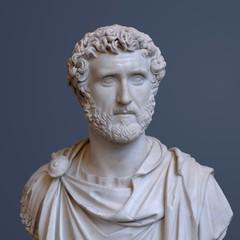
Marcus Aurelius, born in 121 AD and died in 180 AD, was an emperor of the Roman Empire. He is one of the Five Good Emperors and is known for his philosophical thoughts and the stability of his reign. He was not only an outstanding politician but also a famous Stoic philosopher, whose work 'Meditations' has had a profound impact on later generations. more
You May Also Like
“Who you are in public is a test of your conviction; who you are in private, integrity.”
“And everyone lived happily, thought maybe not completely honestly, ever after. The End.”