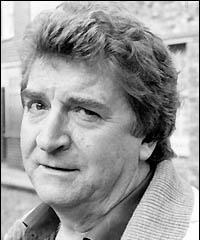
“For Plotinus, what really exists are the Platonic forms, so the true nature or form of things like justice, beauty, maybe numbers, things like that, and these he associates with the intellect because they're the objects of intellect, they are things that intellect can think about.” ThinkingFormJusticeNumbersObjectsIntellectAssociatesTrue NaturePlatonic Author:Peter Adamson
“Plotinus, when he thinks about mind or intellect, the Greek word is 'nous', he thinks about something that's very different, it's much more elevated and special, more abstract, you might say more philosophical than the very broad range of mental events that we talk about in contemporary philosophy of mind.” ThinkingMindDifferentPhilosophyMightSpecialEventsPhilosophicalIntellectContemporaryRangeGreekAbstractBroads Author:Peter Adamson
“The soul must be distinct from intellect because even at its best, what the soul does when it's thinking, is it thinks linguistically, it thinks in a temporarily extended way, so it for example, might go through the steps of an argument chain, as if you were going through a syllogism and seeing that something followed from the premises, whereas intellect simply grasps the forms.” IfsThinkingWayDoeSoulMightFormStepsSeeingExampleArgumentIntellectChainsPremises Author:Peter Adamson
“What the soul is doing is kind of walking through the forms, and so our experience of thinking isn't normally this kind of pure intuitive insight that intellect gets, and that intellect must get right, because it's always identical to its objects, it's always the same as the forms that it's thinking about.” ThinkingKindSoulFormObjectsWalkingPureInsightIntellectIntuitiveIdentical Author:Peter Adamson
“There's a stronger and more kind of controversial element of Plotinus' view of matter, which is that he actually identifies it with evil, or at least the principle of evil, and the reason for this is that he thinks that the the One, the highest principle, can also be thought of as the Good, and that's kind of surprising like, because he has this negative theology which doesn't allow us to say anything about the One. But he believes that it can be seen as the principle of goodness as well as unity, and that if you think about it, goodness and unity sort of go along with each other.” IfsThinkingBelieveWellsKindMatterReasonEvilViewsPrinciplesGoodnessElementsHighestNegativeStrongerUnityTheologySurprisingSay AnythingControversial Author:Peter Adamson
“If you think about for example, proportionality and beauty, things like that, these seem to be some kind of representations of a kind of unity.” IfsThinkingKindSeemsExampleUnityRepresentationProportionality Author:Peter Adamson
“If you think about even very common examples like, say, something that you would build, like a clock or a car or a group of people trying to accomplish something, it fails when its unity breaks down. So when it stops having a single form, which is functioning all together, then it sort of falls apart into discrete elements.” PeopleIfsThinkingTryingTogetherFormFallCommonBreakFailingGroupsCarExampleElementsUnityAccomplishClockBreaking DownFalling ApartDiscrete Author:Peter Adamson
“In fact one of the things about Plotinus is that he maybe not singlehandedly, but I think more than anyone else, killed off the variety and dissension among the philosophical schools of antiquity.” ThinkingFactsSchoolPhilosophicalVarietyAntiquityDissension Author:Peter Adamson
“I think it's important to realise that what happens in Neo-Platonism beginning with Plotinus and Porphyry and then going on for the next several centuries, is a real kind of contest for the ideas and convictions of the intelligentsia of the later Roman Empire. So that you have Christians slowly converting more and more powerful people until of course actually Constantine and then other emperors after him, become Christian, and the empire becomes a Christian empire rather than Pagan empire.” PeopleThinkingKindImportantIdeasRealHappensChristianCoursesNextPowerfulCenturyConvictionEmpiresRealisingContestsEmperorPaganRoman EmpireConvertingConstantine Author:Peter Adamson