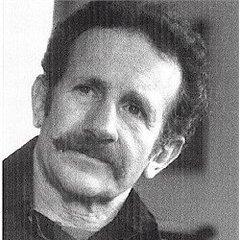
Philip Levine (January 10, 1928 – February 14, 2015) was an acclaimed American poet, best known for his vivid portrayals of working-class life. Born in Detroit, Michigan, during the Great Depression, Levine worked in auto factories and steel mills, experiences that deeply shaped his poetic voice. His poetry often focuses on blue-collar workers, immigrants, and the urban landscape, using plain language to convey profound emotion and dignity. Levine won the Pulitzer Prize for Poetry in 1995 for 'The Simple Truth' and the National Book Award in 1991 for 'What Work Is'. He served as the U.S. Poet Laureate from 2011 to 2012. Over his career, he published more than 20 collections, earning a reputation as a poet of the people. His work has been translated into many languages and continues to inspire readers worldwide.
Related Quotes
“For sure I once thought of myself as the poet who would save the ordinary from oblivion.”
“Back then, I couldn't have left a poem a year and gone back to it.”
“But most commonly, it's one poem that I work on with a lot of intensity.”
“I listen to jazz about three hours a day. I love Louis Armstrong.”
“I started listening to music when I wrote when I had three sons at home.”
“I write what's given me to write.”
“I was very lucky to have a mother who encouraged me to become a poet.”
“My mother carried on and supported us; her ambition had been to write poetry and songs.”
“No one can write like Vallejo and not sound like a fraud. He's just too much himself and not you.”
“I'm seventy-one now, so it's hard to imagine a dramatic change.”
“My father died when I was five, but I grew up in a strong family.”
“The irony is, going to work every day became the subject of probably my best poetry.”
“My earliest poems were a way of talking to somebody. I suppose to myself.”
“I find you in these tears, few, useless and here at last. Don't come back.”
“You have begun to separate the dark from the dark.”
“How weightless/ words are when nothing will do.”