Quotessence
Home / Authors / Robert K. Massie Books
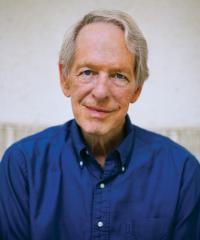
Robert K. Massie

Robert K. Massie Books

Historian

Related Quotes

“I don’t want the books [...] to be too far away; they, also, have become friends. I even feel this way about books I don’t own. In libraries, I find myself visiting the books I used before. I regard those rows of memoirs and letters as voices from the past, bound into books, and I like to make sure they are all there, alive and well. If they have collected dust, I take out the small towel I carry in my briefcase and wipe them off. -from 2012 NYT Book Review Essay”

“A letter from 15 year old Sophia - later Catherine the Great - to her father: My Lord: I beg you to assure yourself that your advice and exhortation will remain forever engraved on my heart, as the seeds of the holy faith will in my soul, to which I pray God to lend all the strength it will need to sustain me through the temptations to which I expect to be exposed... I hope to have the consolation of being worthy of it, and likewise of continuing to receive good news of my dear Papa, and I am, as long as I live, and in an inviolable respect, my lord, your Highness's most humble, most obedient, and faithful daughter and servant, Sophia.”

“Russia, after all, has existed for a thousand years; the Soviet era lasted only seventy-four. The Romanov dynasty, which included such towering figures as Peter and Catherine the Great, had ruled for more than three centuries. It came to an end in brutal murders in a Siberian cellar, but many Russians never knew this had happened. Or how. Or why.”

“Peter, who broke his enemies on the rack and hanged them in Red Square, who had his son tortured to death, is Peter the Great. But Nicholas, whose hand was lighter than that of any tsar before him, is "Bloody Nicholas". In human terms, this is irony rich and dramatic, the more so because Nicholas knew what he was called.”

“In his work habits, Nicholas was solitary. Unlike most monarchs and chiefs of state—unlike even his own wife—he had no private secretary. He preferred to do things for himself. On his desk he kept a large calendar of his daily appointments, scrupulously entered in his own hand. When official papers arrived, he opened them, read them, signed them and put them in envelopes himself.”

“With much the same sense of privacy, Nicholas disliked discussions of politics, especially in casual conversation. A new aide-de-camp, galloping at the side of the Tsar near Livadia on a morning ride, supposed that his duty was to amuse the Tsar with small talk. He chose politics as his subject. Nicholas replied reluctantly, and quickly switched the conversation to the weather, the mountain scenery, the horses and tennis. When the aide persisted, Nicholas put spurs to his horse and galloped ahead. This sense of privacy, along with an unwillingness to provoke personal unpleasantness, created perennial difficulty between the Tsar and his ministers. Ministers were appointed and dismissed directly by the crown. In theory, they were the servants of the Tsar, and he was free to give these posts to whomever he liked, to listen to or ignore a minister’s advice, and to hand down dismissals without explanation.”

“Nicholas never mastered the technique of forceful, efficient management of subordinates. He hated scenes and found it impossible to sternly criticize or dismiss a man to his face. If something was wrong, he preferred to give a minister a friendly reception, comment gently and shake hands warmly. Occasionally, after such an interview, the minister would return to his office, well pleased with himself, only to receive in the morning mail a letter regretfully asking for his resignation. Not unnaturally, these men complained that they had been deceived.”

“Unlike many a royal couple, Nicholas and Alexandra shared the same bed. The bedroom was a large chamber with tall windows opening onto the park. A large double bed made of light-colored wood stood between two windows. Chairs and couches covered in flowered tapestry were scattered about on a thick carpet of mauve pile. To the right of the bed, a door led to a small chapel used by the Empress for her private prayers. Dimly lit by hanging lamps, the room contained only an icon on one wall and a table holding a Bible. Another door led from the bedroom to Alexandra’s private bathroom, where a collection of old-fashioned fixtures were set in a dark recess.”

“The most famous room in the palace—for a time the most famous room in Russia—was the Empress’s mauve boudoir. Everything in it was mauve: curtains, carpet, pillows; even the furniture was mauve-and-white Hepplewhite. Masses of fresh white and purple lilacs, vases of roses and orchids and bowls of violets perfumed the air. Tables and shelves were cluttered with books, papers and porcelain and enamel knicknacks. In this room, Alexandra surrounded herself with mementoes of her family and her religion. The walls were covered with icons. Over her chaise-longue hung a picture of the Virgin Mary. A portrait of her mother, Princess Alice, looked down from another wall. On a table in a place of honor stood a large photograph of Queen Victoria. The only portrait in the room other than religious and family pictures was a portrait of Marie Antoinette.”

“In the evening after supper, Nicholas often sat in the family drawing room reading aloud while his wife and daughters sewed or embroidered. His choice, said Anna Vyrubova, who spent many of these cozy evenings with the Imperial family, might be Tolstoy, Turgenev or his own favorite, Gogol. On the other hand, to please the ladies, it might be a fashionable English novel. Nicholas read equally well in Russian, English and French and he could manage in German and Danish.”

“Books were supplied by his private librarian, whose job it was to provide the Tsar each month with twenty of the best books from all countries. This collection was laid out on a table and Nicholas arranged them in order of preference; thereafter the Tsar’s valets saw to it that no one disarranged them until the end of the month. Sometimes, instead of reading, the family spent evenings pasting snapshots taken by the court photographers or by themselves into green leather albums stamped in gold with the Imperial monograph. Nicholas enjoyed supervising the placement and pasting of the photographs and insisted that the work be done with painstaking neatness.”

“To prove to [her friend, Swedish diplomat Count] Gyllenborg that she was not superficial, Catherine composed an essay about herself, "so that he would see whether I knew myself or not." The next day, she wrote and handed to Gyllenborg an essay titled 'Portrait of a Fifteen-Year-Old Philosopher.' He was impressed and returned it with a dozen pages of comments, mostly favorable. "I read his remarks again and again, many times [Catherine later recalled in her memoirs]. I impressed them on my consciousness and resolved to follow his advice. In addition, there was something else surprising: one day, while conversing with me, he allowed the following sentence to slip out: 'What a pity that you will marry! I wanted to find out what he meant, but he would not tell me.”