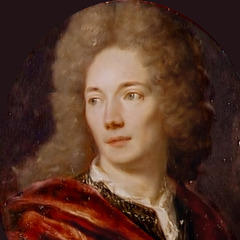
Jean de la Bruyere
Jean de la Bruyere was a French philosopher and moralist, born on August 16, 1645, and died on May 10, 1696. His works have had a profound impact on posterity.
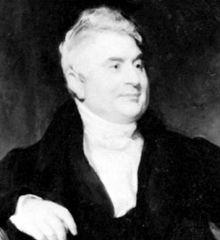
Jean de la Bruyere was a French philosopher and moralist, born on August 16, 1645, and died on May 10, 1696. His works have had a profound impact on posterity.
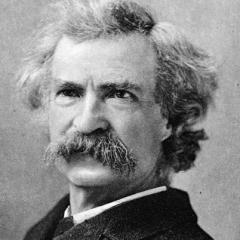
Mark Twain, born Samuel Langhorne Clemens, was a renowned American author and humorist in the 19th century. His works are characterized by humor, satire, and profound social insight, with notable novels such as 'The Adventures of Tom Sawyer' and 'The Adventures of Huckleberry Finn'.
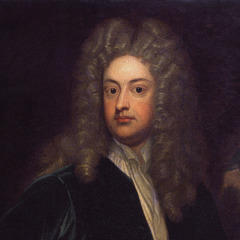
Joseph Addison, born on May 1, 1672, and died on June 17, 1719, was an influential English essayist, dramatist, and poet. He is known for his elegant prose style and his co-authorship of the magazine 'The Spectator' with Richard Steele.
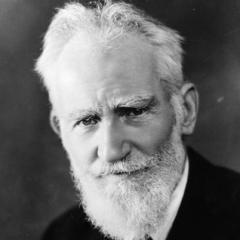
George Bernard Shaw (July 26, 1856 - November 2, 1950) was an Irish-British playwright, critic, and socialist. He is renowned for his satirical and witty dramatic works.
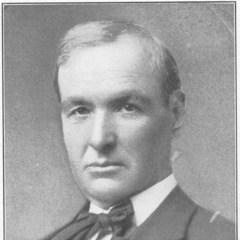
E.W. Howe, born on May 3, 1853, in London, Ontario, Canada, was a renowned novelist. His works primarily reflect the changes in Canadian society and culture, enjoying great popularity among readers.
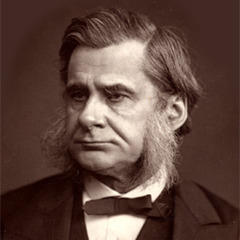
Thomas Huxley, a British biologist, was a staunch supporter of Darwin's theory of evolution. Renowned for his research in comparative anatomy, embryology, paleontology, and philosophy, Huxley made significant contributions to the field of biology. He had a profound influence on science, not only through his support of Darwin's theory of evolution but also through his role as a science popularizer and advocate for science education.
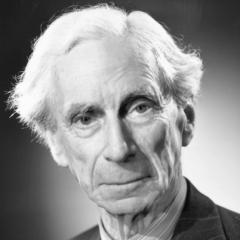
Bertrand Russell was a British philosopher, mathematician, and logician born on May 18, 1872, and died on February 2, 1970. He is known for his contributions to logic and mathematics, particularly in the fields of mathematical logic and philosophical analysis. His works spanned a wide range of subjects, including ethics, political philosophy, history, and literary criticism.
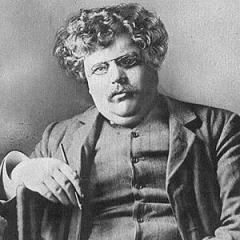
Gilbert K. Chesterton was an English writer, critic, and theologian, born on May 29, 1874, and died on June 14, 1936. Known for his unique literary style and profound philosophical thinking, Chesterton's works spanned a variety of genres, including novels, poetry, drama, and criticism.
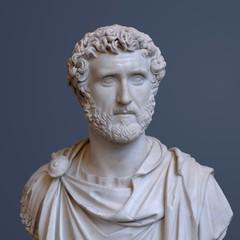
Marcus Aurelius, born in 121 AD and died in 180 AD, was an emperor of the Roman Empire. He is one of the Five Good Emperors and is known for his philosophical thoughts and the stability of his reign. He was not only an outstanding politician but also a famous Stoic philosopher, whose work 'Meditations' has had a profound impact on later generations.

Arthur Schopenhauer was a prominent German philosopher born on February 22, 1788, and died on September 21, 1860. He is one of the most important figures in 19th-century German philosophy and is known for his unique pessimistic philosophical ideas.