Quotessence
Home / Authors / Thomas Ligotti
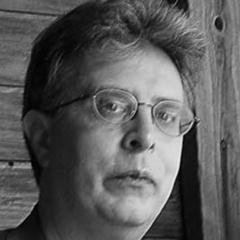
Thomas Ligotti

Thomas Ligotti Quotes

Author

Filter quotes by topic

Famous Thomas Ligotti Quotes

“We did not make ourselves, nor did we fashion a world that could not work without pain, and great pain at that, with a little pleasure, very little, to string us along--a world where all organisms are inexorably pushed by pain throughout their lives to do that which will improve their chances to survive and create more of themselves. Left unchecked, this process will last as long as a single cell remains palpitating in this cesspool of the solar system, this toilet of the galaxy. So why not lend a hand in nature's suicide? For want of a deity that could be held to account for a world in which there is terrible pain, let nature take the blame for our troubles. We did not create an environment uncongenial to our species, nature did. One would think that nature was trying to kill us off, or get us to suicide ourselves once the blunder of consciousness came upon us. What was nature thinking? We tried to anthropomorphize it, to romanticize it, to let it into our hearts. But nature kept its distance, leaving us to our own devices. So be it. Survival is a two-way street. Once we settle ourselves off-world, we can blow up this planet from outer space. It's the only way to be sure its stench will not follow us. Let it save itself if it can--the condemned are known for the acrobatics they will execute to wriggle out of their sentences. But if it cannot destroy what it has made, and what could possibly unmake it, then may it perish along with every other living thing it has introduced to pain.”

“If human pleasure did not have both a lid and a time limit, we would not bestir ourselves to do things that were not pleasurable, such as toiling for our subsistence. And then we would not survive. By the same token, should our mass mind ever become discontented with the restricted pleasures doled out by nature, as well as disgruntled over the lack of restrictions on pain, we would omit the mandates of survival from our lives out of a stratospherically acerbic indignation. And then we would not reproduce. As a species, we do not shout into the sky, “The pleasures of this world are not enough for us.” In fact, they are just enough to drive us on like oxen pulling a cart full of our calves, which in their turn will put on the yoke. As inordinately evolved beings, though, we can postulate that it will not always be this way. “A time will come,” we say to ourselves, “when we will unmake this world in which we are battered between long burden and brief delight, and will live in pleasure for all our days.” The belief in the possibility of long-lasting, high-flown pleasures is a deceptive but adaptive flimflam. It seems that nature did not make us to feel too good for too long, which would be no good for the survival of the species, but only to feel good enough for long enough to keep us from complaining that we do not feel good all the time.”

“We are aberrations—beings born undead, neither one thing nor another, or two things at once … uncanny things that have nothing to do with the rest of creation, horrors that poison the world by sowing our madness everywhere we go, glutting daylight and darkness with incorporeal obscenities. From across an immeasurable divide, we brought the supernatural into all that is manifest. Like a faint haze it floats around us. We keep company with ghosts. Their graves are marked in our minds, and they will never be disinterred from the cemeteries of our remembrance. Our heartbeats are numbered, our steps counted. Even as we survive and reproduce, we know ourselves to be dying in a dark corner of infinity. Wherever we go, we know not what expects our arrival but only that it is there.”

“We are only chance visitants to this jungle of blind mutations. The natural world existed when we did not, and it will continue to exist long after we are gone. The supernatural crept into life only when the door of consciousness was opened in our heads. The moment we stepped through that door, we walked out on nature. Say what we will about it and deny it till we die--we are blighted by our knowing what is too much to know and too secret to tell one another if we are to stride along our streets, work at our jobs, and sleep in our beds. It is the knowledge of a race of beings that is only passing through this shoddy cosmos.”

“The sinister, the terrible never deceive: the state in which they leave us is always one of enlightenment. And only this condition of vicious insight allows us a full grasp of the world, all things considered, just as a frigid melancholy grants us full possession of ourselves. We may hide from horror only in the heart of horror. (“The Medusa”)”

“As history confirms, people will change their minds about almost anything, from which god they worship to how they style their hair. But when it comes to existential judgments, human beings in general have an unfalteringly good opinion of themselves and their condition in this world and are steadfastly confident they are not a collection of self-conscious nothings.”

“No other life forms know they are alive, and neither do they know they will die. This is our curse alone. Without this hex upon our heads, we would never have withdrawn as far as we have from the natural—so far and for such a time that it is a relief to say what we have been trying with our all not to say: We have long since been denizens of the natural world. Everywhere around us are natural habitats, but within us is the shiver of startling and dreadful things. Simply put: We are not from here. If we vanished tomorrow, no organism on this planet would miss us. Nothing in nature needs us.”

“Nature proceeds by blunders; that is its way. It is also ours. So if we have blundered by regarding consciousness as a blunder, why make a fuss over it? Our self-removal from this planet would still be a magnificent move, a feat so luminous it would bedim the sun. What do we have to lose? No evil would attend our departure from this world, and the many evils we have known would go extinct along with us. So why put off what would be the most laudable masterstroke of our existence, and the only one?”