Quotessence
Home / Authors / Wilhelm Reich
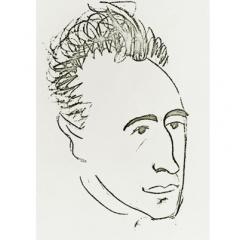
Wilhelm Reich

Wilhelm Reich Quotes

Psychoanalyst

Filter quotes by topic

Famous Wilhelm Reich Quotes

“When, then, the Social Democrat worker found himself in the economic crisis which degraded him to the status of a coolie, the development of his revolutionary sentiments was severely retarded by the conservative structuralization that had been taking shape in him for decades. Either he remained in the camp of the Social Democrats, notwithstanding his criticism and rejection of their policies, or he went over to the NSDAP [Nazi party] in search of a better replacement. Irresolute and indecisive, owing to the deep contradiction between revolutionary and conservative sentiments, disappointed by his own leadership, he followed the line of least resistance. Whether he would give up his conservative tendencies and arrive at a complete consciousness of his actual responsibility in the production process, i.e., at a revolutionary consciousness, depended solely on the correct or incorrect leadership of the revolutionary party. Thus the communist assertion that it was the Social Democrat policies that put fascism in the saddle was correct from a psychological viewpoint. Disappointment in Social Democracy, accompanied by the contradiction between wretchedness and conservative thinking, must lead to fascism if there are no revolutionary organizations. For example, following the fiasco of the Labor party's policies in England, in 1930–31, fascism began to infiltrate the workers who, then, in the election of 1931, cut away to the Right, instead of going over to communism.”

“It did not take National Socialism long to rally workers, most of whom were either unemployed or still very young, into the SA [Sturmangriff, Stormtroopers, "brown shirts"]. To a large extent, however, these workers were revolutionary in a dull sort of way and still maintained an authoritarian attitude. For this reason National Socialist propaganda was contradictory; it's content was determined by the class for which it was intended. Only in its manipulation of the mystical feelings of the masses was it clear and consistent. In talks with followers of the National Socialist party and especially with members of the SA, it was clearly brought out that the revolutionary phraseology of National Socialism was the decisive factor in the winning over of these masses. One heard National Socialists deny that Hitler represented capital. One heard SA men warn Hitler that he must not betray the cause of the "revolution." One heard SA men say that Hitler was the German Lenin. Those who went over to National Socialism from Social Democracy and the liberal central parties were, without exception, revolutionary minded masses who were either nonpolitical or politically undecided prior to this. Those who went over from the Communist party were often revolutionary elements who simply could not make any sense of many of the German Communist party's contradictory political slogans. In part they were men upon whom the external features of Hitler's party, it's military character, its assertiveness, etc., made a big impression. To begin with, it is the symbol of the flag that stands out among the symbols used for purposes of propaganda.”

“Race theorists, who are as old as imperialism itself, want to achieve racial purity in peoples whose interbreeding, as a result of the expansion of world economy, is so far advanced that racial purity can have meaning only to a numbskull.”

“Nor will arguments be of any use against a fascist who is narcissistically convinced of the supreme superiority of his Teutonism, if only because he operates with irrational feelings and not with arguments. Hence, it would be hopeless to try to prove to a fascist that black people and Italians are not racially "inferior" to the Teutons. He feels himself to be "superior," and that's the end of it. The race theory can be refuted only by exposing its irrational functions, of which there are essentially two: that of giving expression to certain unconscious and emotional currents prevalent in the nationalistically disposed man and of concealing certain psychic tendencies.”

“Ignorance of the character structure of masses of people invariably leads to fruitless questioning. The Communists, for example, said that it was the misdirected policies of the Social Democrats that made it possible for the fascists to seize power. Actually this explanation did not explain anything, for it was precisely the Social Democrats who made a point of spreading illusions. In short, it did not result in a new mode of action. That political reaction in the form of fascism had 'befogged,' 'corrupted,' and 'hypnotized' the masses is an explanation that is as sterile as the others. This is and will continue to be the function of fascism as long as it exists. Such explanations are sterile because they fail to offer a way out. Experience teaches us that such disclosures, no matter how often they are repeated, do not convince the masses; that, in other words, social economic inquiry by itself is not enough. Wouldn't it be closer to the mark to ask, what was going on in the masses that they could not and would not recognize the function of fascism? To say that, 'The workers have to realize...' or 'We didn't understand...' does not serve any purpose. Why didn't the workers realize, and why didn't they understand? The questions that formed the basis of the discussion between the Right and the Left in the workers' movements are also to be regarded as sterile. The Right contended that the workers were not predisposed to fight; the Left, on the other hand, refuted this and asserted that the workers were revolutionary and that the Right's statement was a betrayal of revolutionary thinking. Both assertions, because they failed to see the complexities of the issue, were rigidly mechanistic. A realistic appraisal would have had to point out that the average worker bears a contradiction in himself; that he, in other words, is neither a clear-cut revolutionary nor a clear-cut conservative, but stands divided. His psychic structure derives on the one hand from the social situation (which prepares the ground for revolutionary attitudes) and on the other hand from the entire atmosphere of authoritarian society—the two being at odds with one another.”

“The word fascism is not a word of abuse any more than the word capitalism is. It is a concept denoting a very definite kind of mass leadership and mass influence: authoritarian, one-party system, hence totalitarian, a system in which power takes priority over objective interests, and facts are distorted for political purposes. Hence, there are "fascist Jews," just as there are "fascist Democrats.”

“Finally, we arrive at the question of the so-called nonpolitical man. Hitler not only established his power from the very beginning with masses of people who were until then essentially nonpolitical; he also accomplished his last step to victory in March of 1933 in a "legal" manner, by mobilizing no less than five million nonvoters, that is to say, nonpolitical people. The Left parties had made every effort to win over the indifferent masses, without posing the question as to what it means "to be indifferent or nonpolitical." If an industrialist and large estate owner champions a rightist party, this is easily understood in terms of his immediate economic interests. In his case a leftist orientation would be at variance with his social situation and would, for that reason, point to irrational motives. If an industrial worker has a leftist orientation, this too is by all mean rationally consistent—it derives from his economic and social position in industry. If, however, a worker, an employee, or an official has a rightist orientation, this must be ascribed to a lack of political clarity, i.e., he is ignorant of his social position. The more a man who belongs to the broad working masses is nonpolitical, the more susceptible he is to the ideology of political reaction. To be nonpolitical is not, as one might suppose, evidence of a passive psychic condition, but of a highly active attitude, a defense against the awareness of social responsibility. The analysis of this defense against consciousness of one's social responsibility yields clear insights into a number of dark questions concerning the behavior of the broad nonpolitical strata. In the case of the average intellectual "who wants nothing to do with politics," it can easily be shown that immediate economic interests and fears related to his social position, which is dependent upon public opinion, lie at the basis of his noninvolvement. These fears cause him to make the most grotesque sacrifices with respect to his knowledge and convictions. Those people who are engaged in the production process in one way or another and are nonetheless socially irresponsible can be divided into two major groups. In the case of the one group the concept of politics is unconsciously associated with the idea of violence and physical danger, i.e., with an intense fear, which prevents them from facing life realistically. In the case of the other group, which undoubtedly constitutes the majority, social irresponsibility is based on personal conflicts and anxieties, of which the sexual anxiety is the predominant one. […] Until now the revolutionary movement has misunderstood this situation. It attempted to awaken the "nonpolitical" man by making him conscious solely of his unfulfilled economic interests. Experience teaches that the majority of these "nonpolitical" people can hardly be made to listen to anything about their socio-economic situation, whereas they are very accessible to the mystical claptrap of a National Socialist, despite the fact that the latter makes very little mention of economic interests. [This] is explained by the fact that severe sexual conflicts (in the broadest sense of the word), whether conscious or unconscious, inhibit rational thinking and the development of social responsibility. They make a person afraid and force him into a shell. If, now, such a self-encapsulated person meets a propagandist who works with faith and mysticism, meets, in other words, a fascist who works with sexual, libidinous methods, he turns his complete attention to him. This is not because the fascist program makes a greater impression on him than the liberal program, but because in his devotion to the führer and the führer's ideology, he experiences a momentary release from his unrelenting inner tension. Unconsciously, he is able to give his conflicts a different form and in this way to "solve" them.”

“Without the power to put them into practice, truths are of no use. They remain academic. Power, no matter what kind of power it is, without a foundation in truth, is a dictatorship, more or less and in one way or another, for it is always based on man's fear of the social responsibility and personal burden that "freedom" entails. Dictatorial power and truth do not go together. They are mutually exclusive.”

“The fascist dictator declares that the masses of people are biologically inferior and crave authority, that basically, they are slaves by nature. Hence, a totalitarian authoritarian regime is the only possible form of government for such people. It is significant that all dictators who today plunge the world into misery stem from the suppressed masses of people. They are intimately familiar with this sickness on the part of masses of people. What they lack is an insight into natural processes and development, the will to truth and research, so that they are never moved by a desire to want to change these facts. On the other hand, the formal democratic leaders made the mistake of assuming that the masses of people were automatically capable of freedom and thereby precluded every possibility of establishing freedom and self-responsibility in masses of people as long as they were in power. They were engulfed in the catastrophe and will never reappear. Our answer is scientific and rational. It is based on the fact that masses of people are indeed incapable of freedom, but it does not—as racial mysticism does—look upon this incapacity as absolute, innate, and eternal. It regards this incapacity as the result of former social conditions of life and, therefore, as changeable.”

“It is obvious that the fascist mass pestilence, with its background of thousands of years, cannot be mastered with social measures corresponding to the past three hundred years. The discovery of the natural biological work democracy in international human intercourse is the answer to fascism. This will be no less true even if not one of the living sex-economists, orgone biophysicists or work democrats should live to see its general functioning and its victory over the irrationalism in social life.”